Stellar Classification
Each star or dwarf in Elite: Dangerous has an identifier for its classification which conforms to the Morgan–Keenan (MK) classification system.
For example, the Sun of Sol has the classification identifier: G2 V
Each identifier consists of three components:
- Spectral class: A capital letter out of the sequence: O, B, A, F, G, K, M. (A helpful real-world mnemonic for remembering this is, “Oh Be A Fine Girl, Kiss Me.”) This mainly specifies the temperature ranging from O (hottest) to M (coolest). Other letters specify extensions to this classification system, namely: W (WN, WC, WO), L, T, Y, C, S, D. A few of those classes have subclasses such as DA, DB and DC as subclasses of D.
- Spectral subclass: Each letter class is then subdivided using a numeric digit with 0 being the hottest and 9 being the coolest.
- Luminosity class: A luminosity class is added to the spectral class using Roman numerals.This classifies the stars by its spectral characteristics considering color and brightness. Those spectral characteristics provide information about the type of the star:
- I for supergiants
- Ia or 0 for extremely luminous supergiants
- Iab for normal supergiants
- Ib for less luminous supergiants
- II for bright giants
- III for regular giants
- IV for sub-giants
- V for _main-sequence stars (_most of the known stars belong to this class)
- Va for extremely luminous main sequence stars
- Vab for luminous main sequence stars
- Vb for normal main sequence stars
- Vz for less luminous main sequence stars
- VI for sub-dwarfs
- VII for white dwarf
Thus, G2 V means: The Sun is semi hot (G), it belongs to the hotter stars (2) in class G and it is considered as a so called main-sequence star (V).
Star Types
Main Sequence Stars (O, B, A, F, G, K, M)
| Class | Description / Notes | Fuel-Scoopable | Rarity Within Type | Image |
|---|---|---|---|---|
| O | Class O type stars are the most luminous and massive main sequence stars in the galaxy. They range in mass from 15 to 90 solar masses and burn very brightly indeed, with a surface temperature reaching 52,000 K so appear very blue. They are very short lived with lifetimes of 1 - 10 million years, ending in supernova. Class O star systems rarely contain terrestrial bodies. One of the most likely to host a stellar nursery. | Yes | Very Rare (~0.2%) | 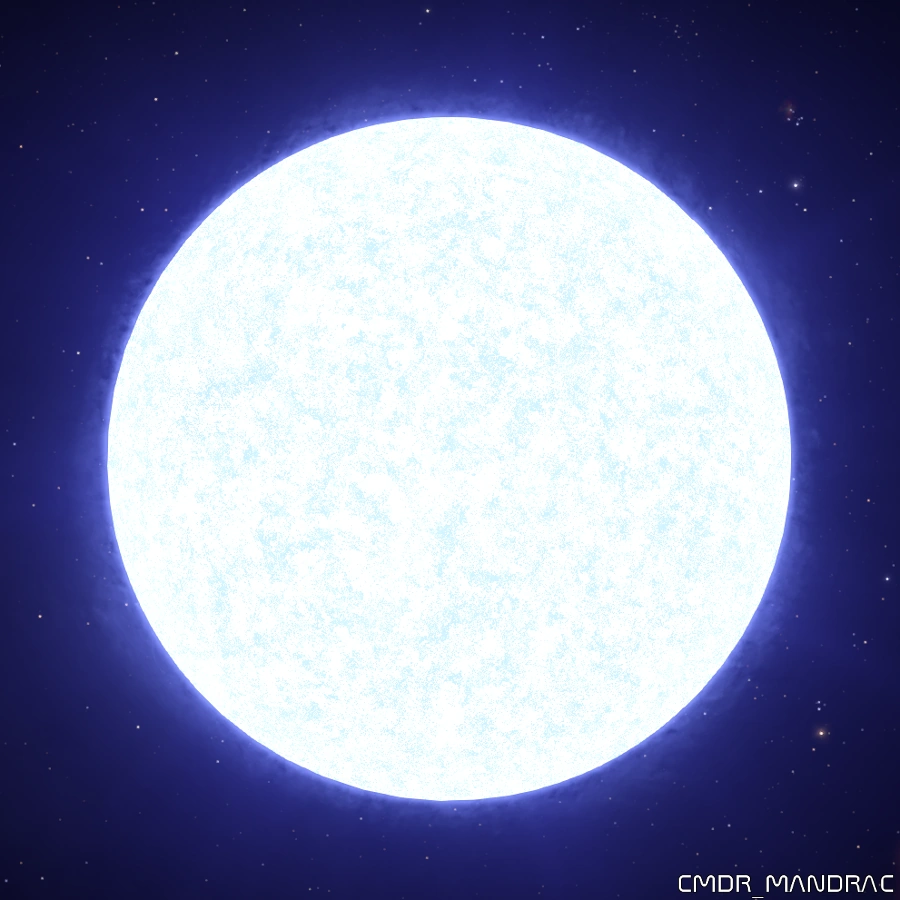 |
| B | Class B stars are very luminous blue-white stars. They range in mass from 2 to 16 solar masses and have a surface temperature reaching 30,000 K. Their lifetimes are shorter than most main sequence stars. Class B star systems rarely contain terrestrial bodies. One of the most likely to host a stellar nursery. | Yes | Rare (~1.7%) | 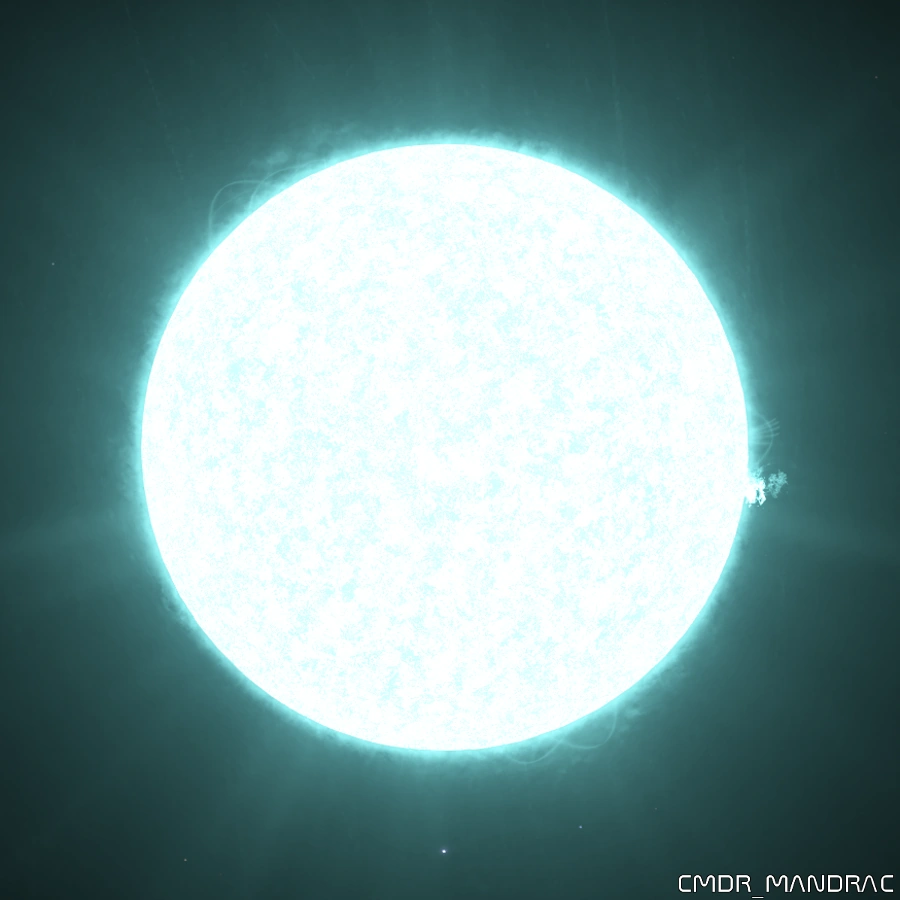 |
| A | Class A stars are hot white or bluish white main sequence stars. They range in mass from 1.4 to 2.1 solar masses and have a surface temperature reaching 10,000 K. Class A star systems often contain high metal content worlds and metal-rich bodies. | Yes | Uncommon (~6%) | 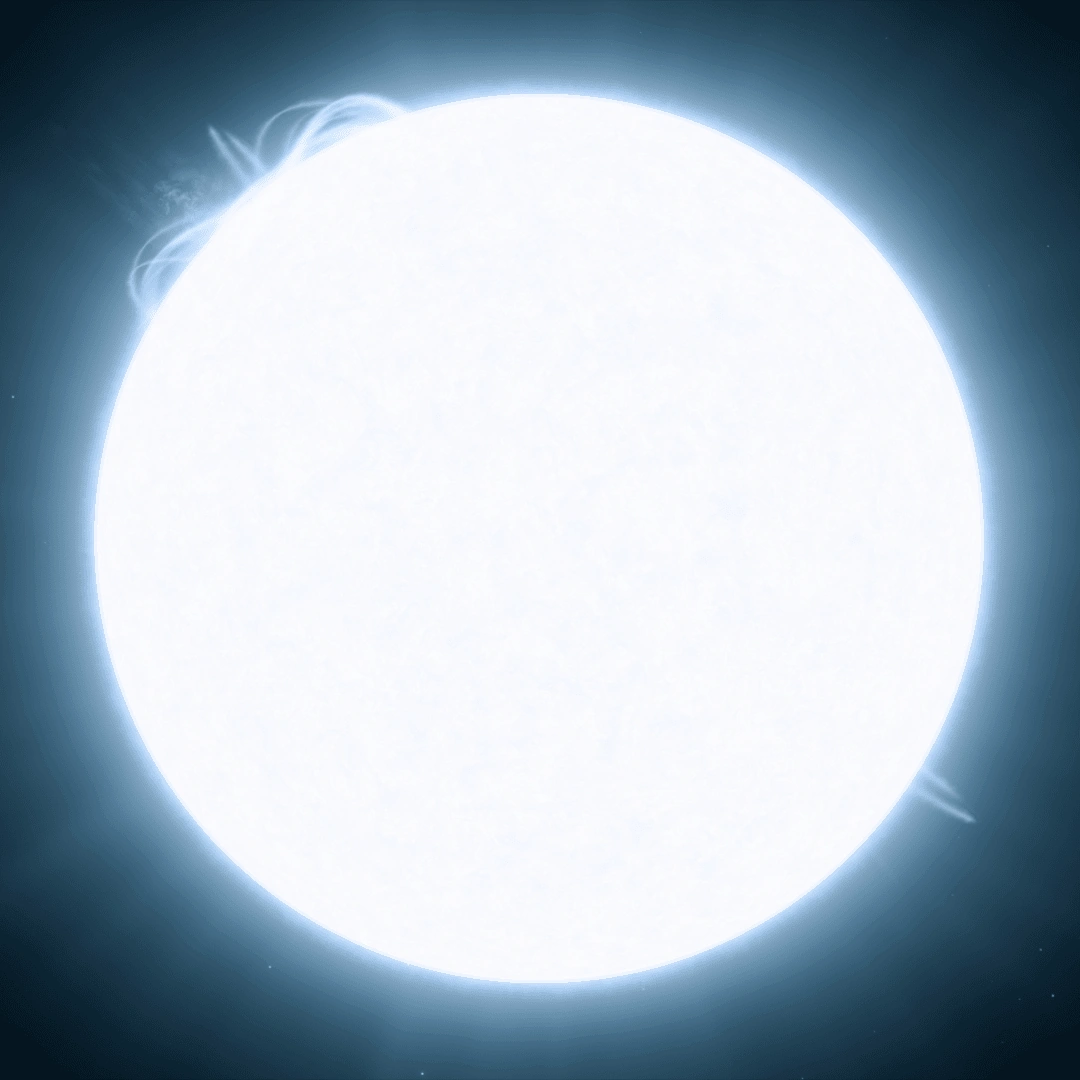 |
| F | Class F stars are white main sequence stars. They range in mass from 1 to 1.4 solar masses and have a surface temperature reaching 7,600 K. Class F star systems are one of the most likely to contain Earth-like worlds. | Yes | Common (~12%) | 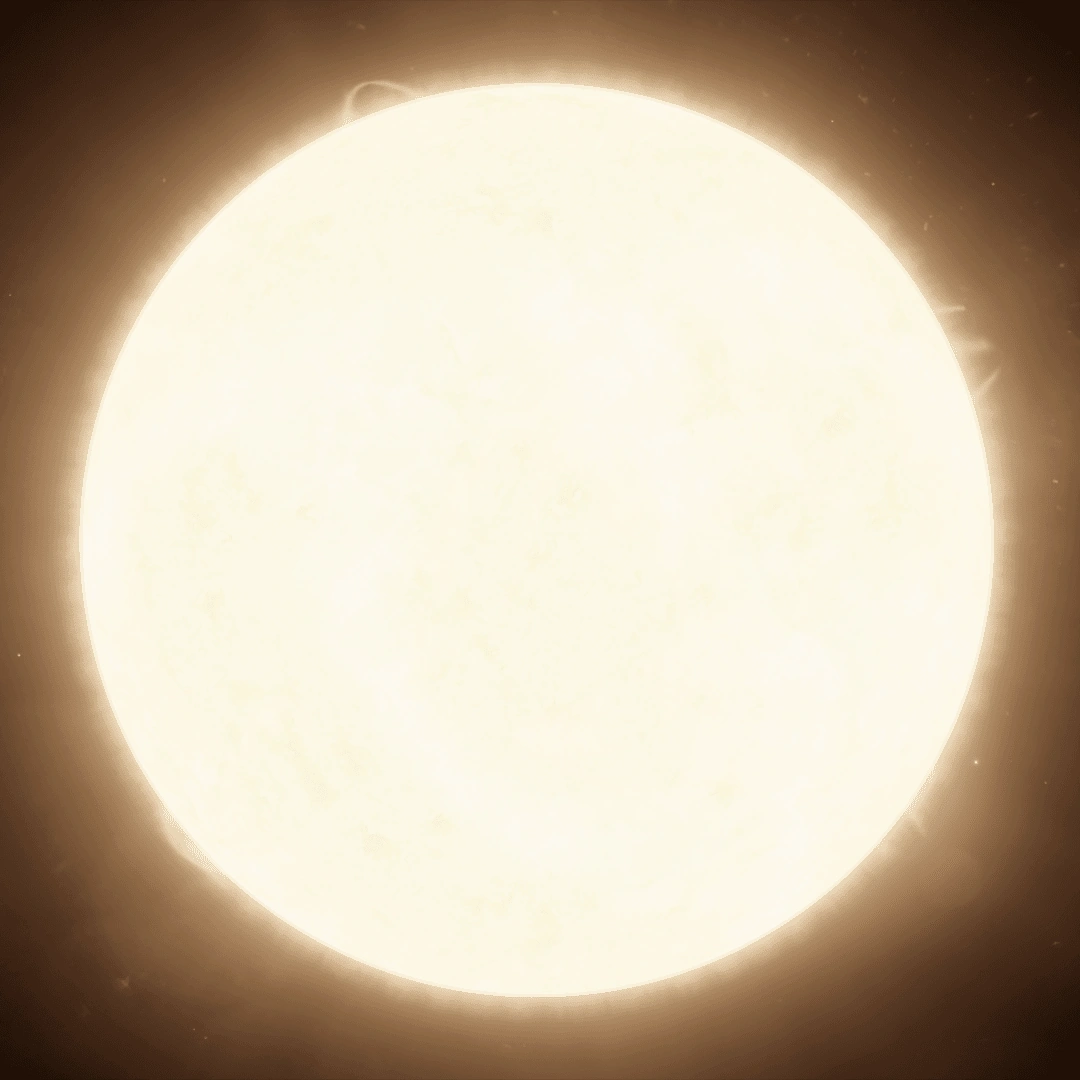 |
| G | Class G stars are white-yellow main sequence stars. They range in mass from 0.8 to 1.2 solar masses and have a surface temperature reaching 6,000 K. Class G star systems are one of the most likely to contain Earth-like worlds. | Yes | Common (~9%) | 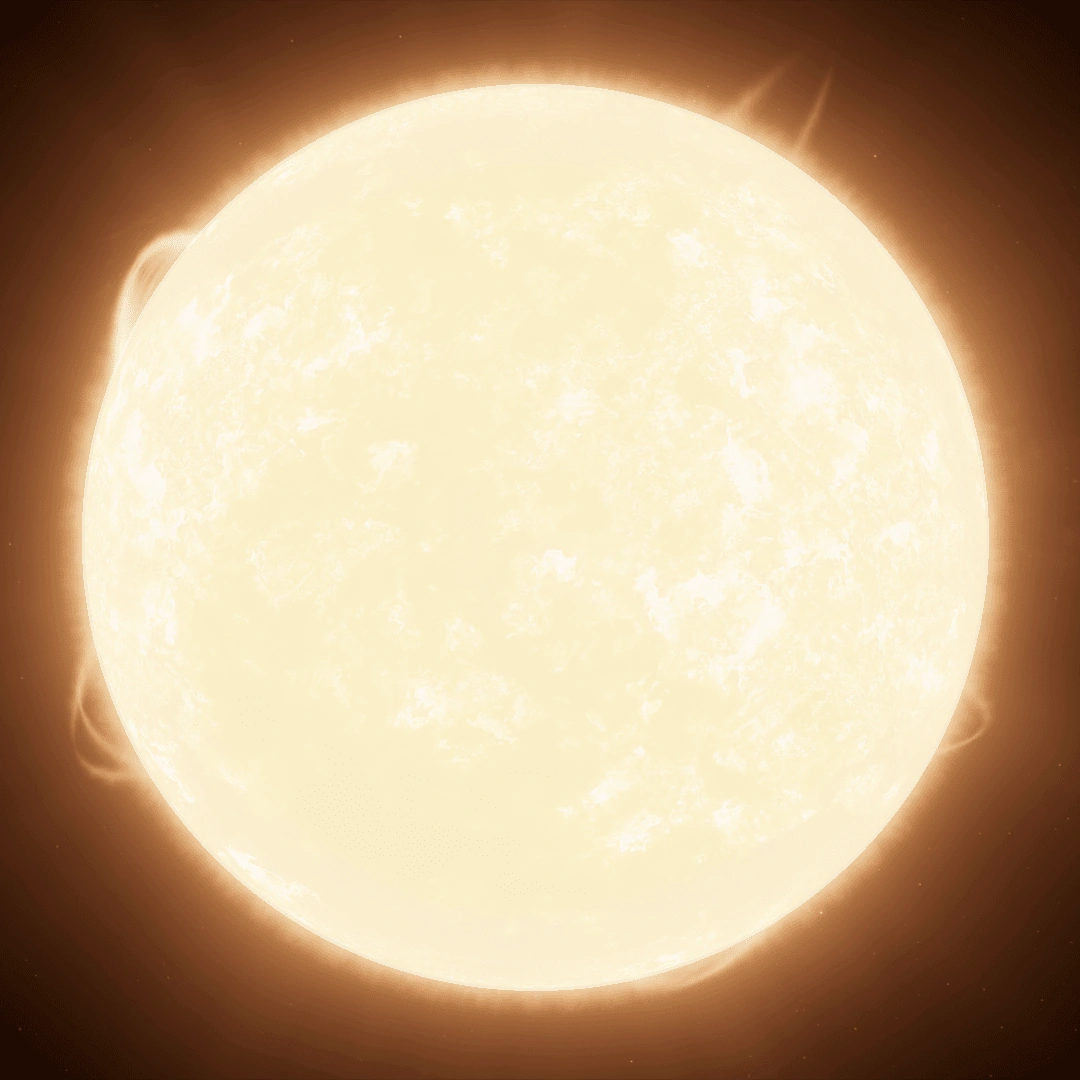 |
| K | Class K stars are yellow-orange main sequence stars with a long and generally stable life. They range in mass from 0.6 to 0.9 solar masses and have a surface temperature reaching 5,000 K. Class K star systems are the most likely to contain water worlds and rocky bodies. | Yes | Common (~25%) | 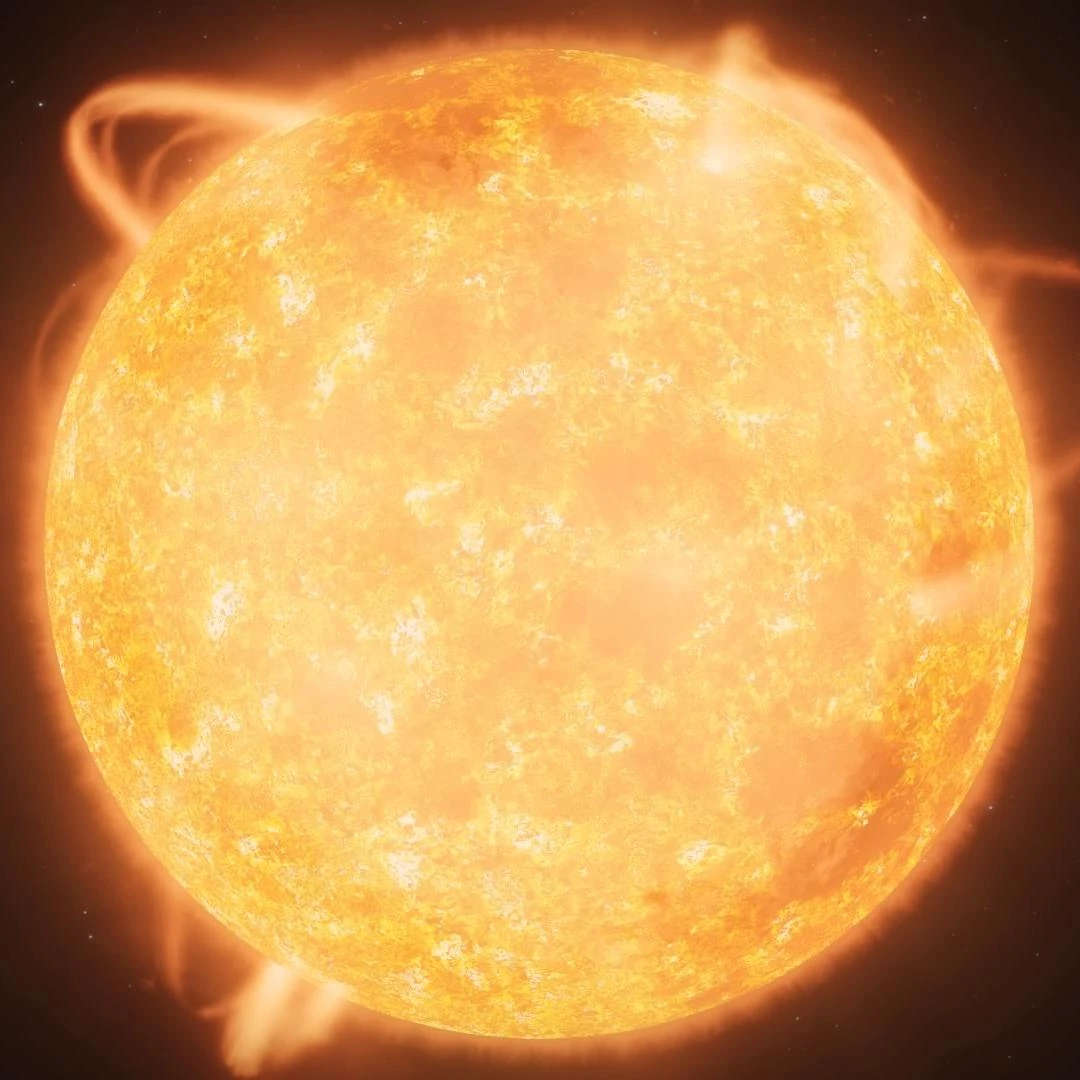 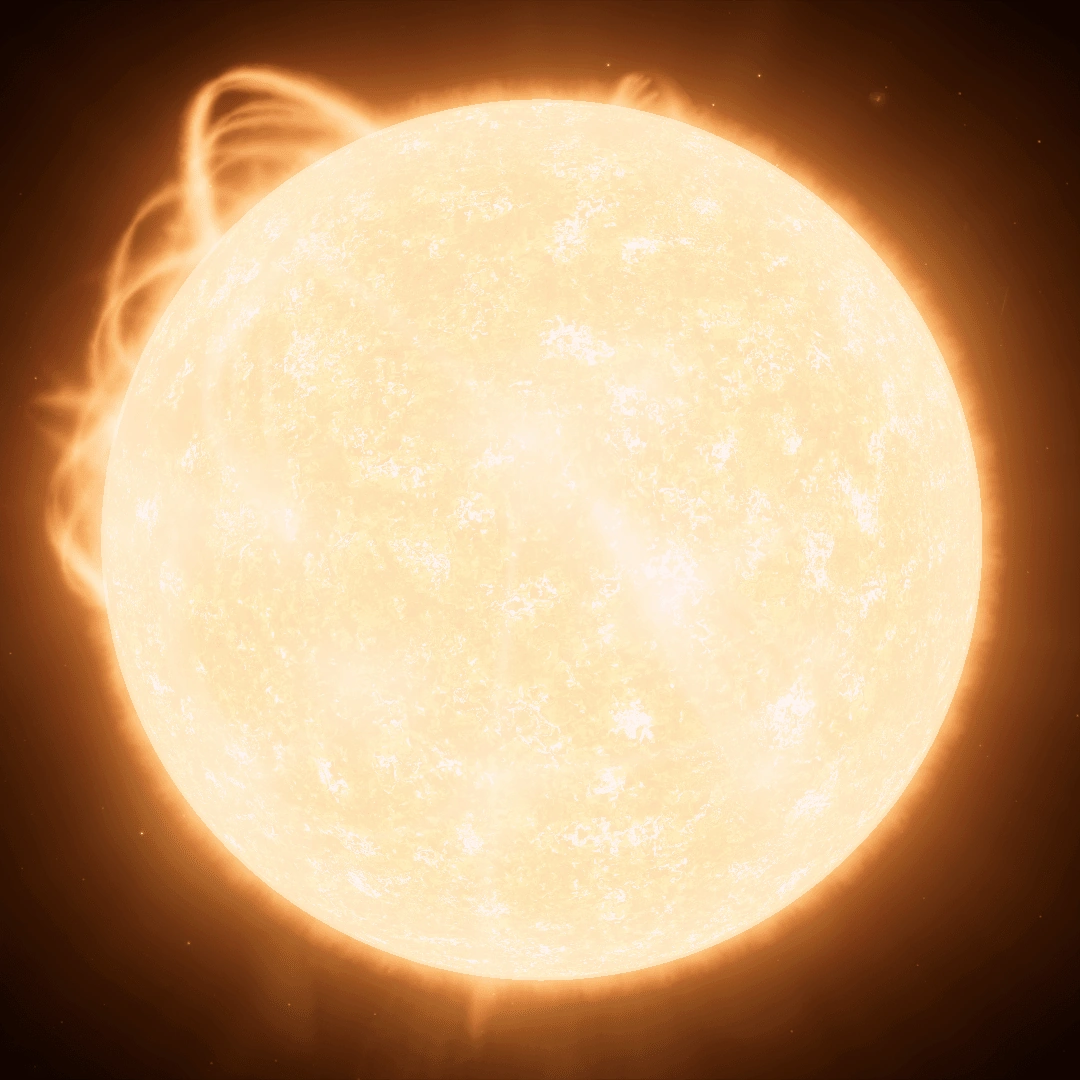 |
| M | Class M stars are red stars that form the bulk of the main sequence stars in the galaxy. Their mass is low, as is their surface temperature. Class M star systems tend to contain many icy bodies and rocky ice worlds. | Yes | Very Common (~46%) | 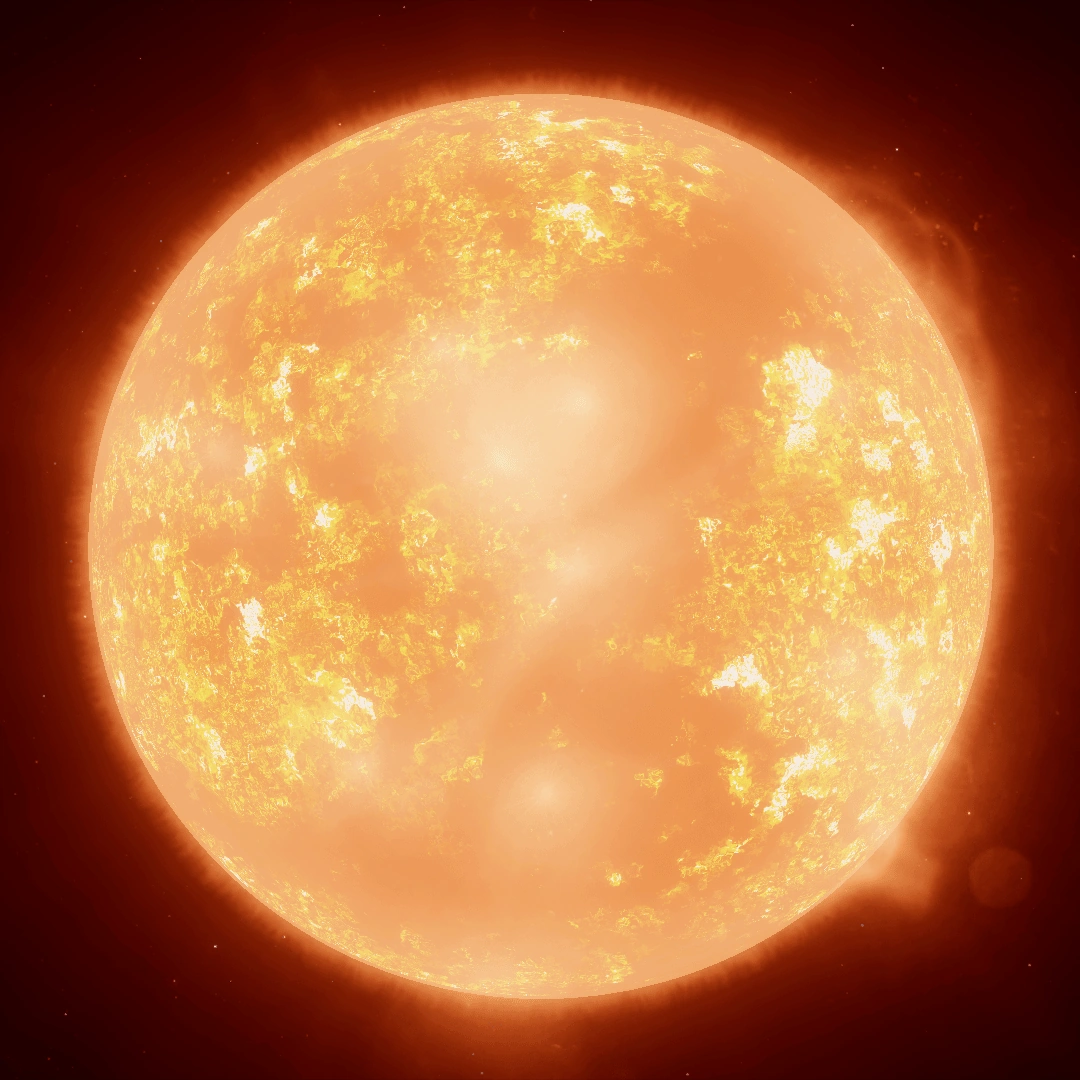 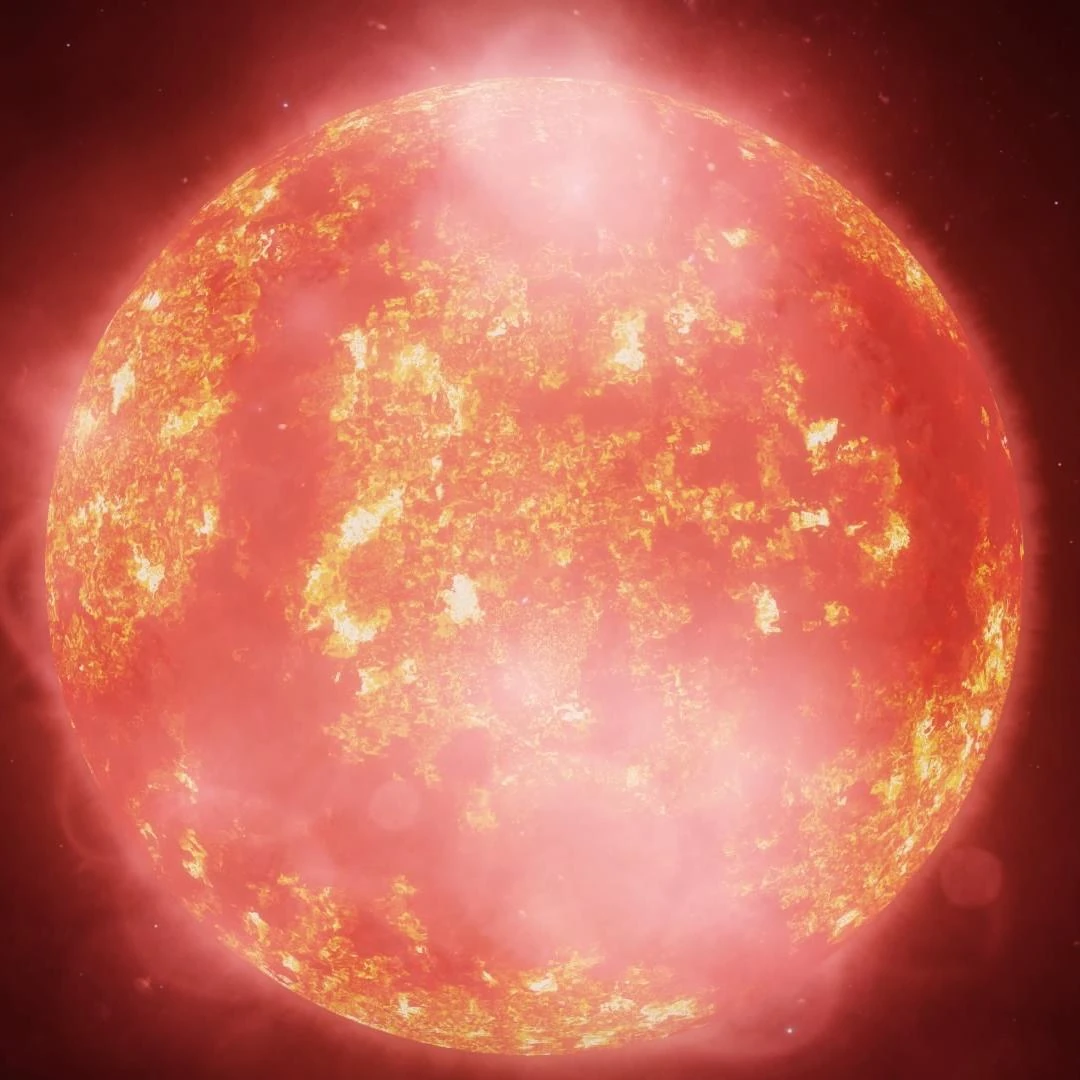 |
Giants and Supergiants
| Class | Description / Notes | Fuel-Scoopable | Rarity Within Type | Image |
|---|---|---|---|---|
| B Blue-White Supergiant | Class B blue-white supergiant star. It is approaching the end of its life and hydrogen burning has stopped in its core. The star has begun expanding towards being a red supergiant. | Yes | Very Rare (~0.7%) | 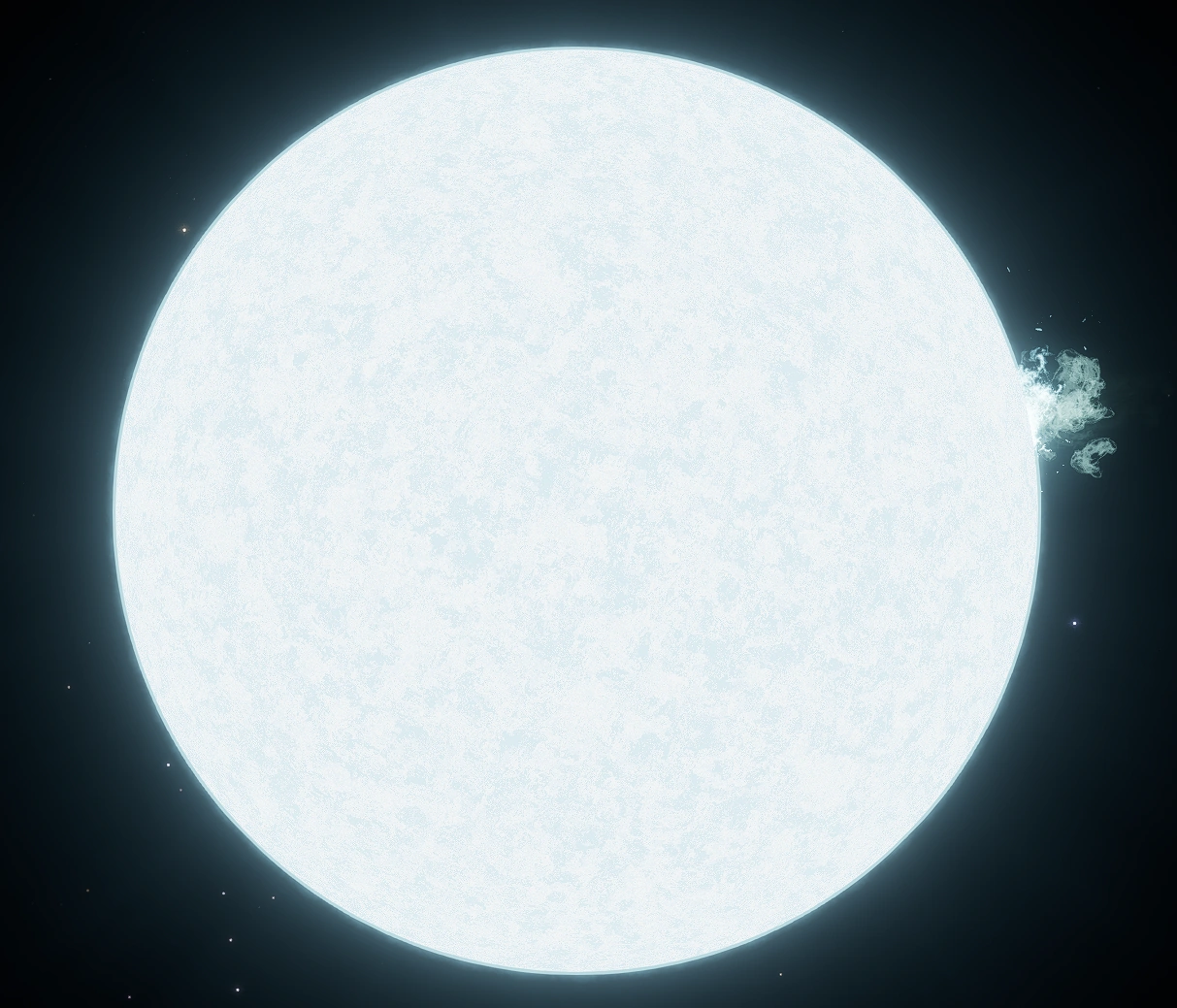 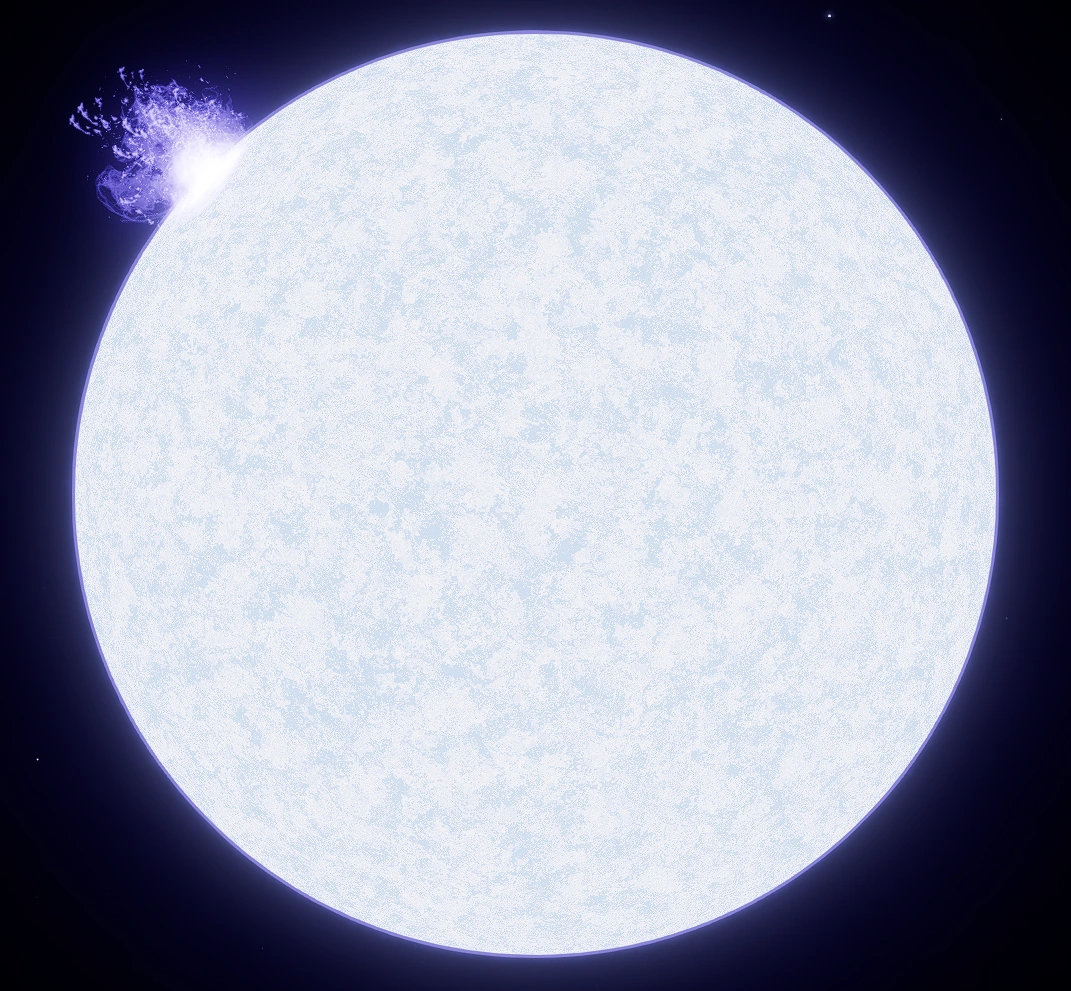 |
| A Blue-White Supergiant | Class A blue-white supergiant star. It is approaching the end of its life and hydrogen burning has stopped in its core, and the star has begun expanding into a red supergiant. | Yes | Uncommon (~9.2%) | 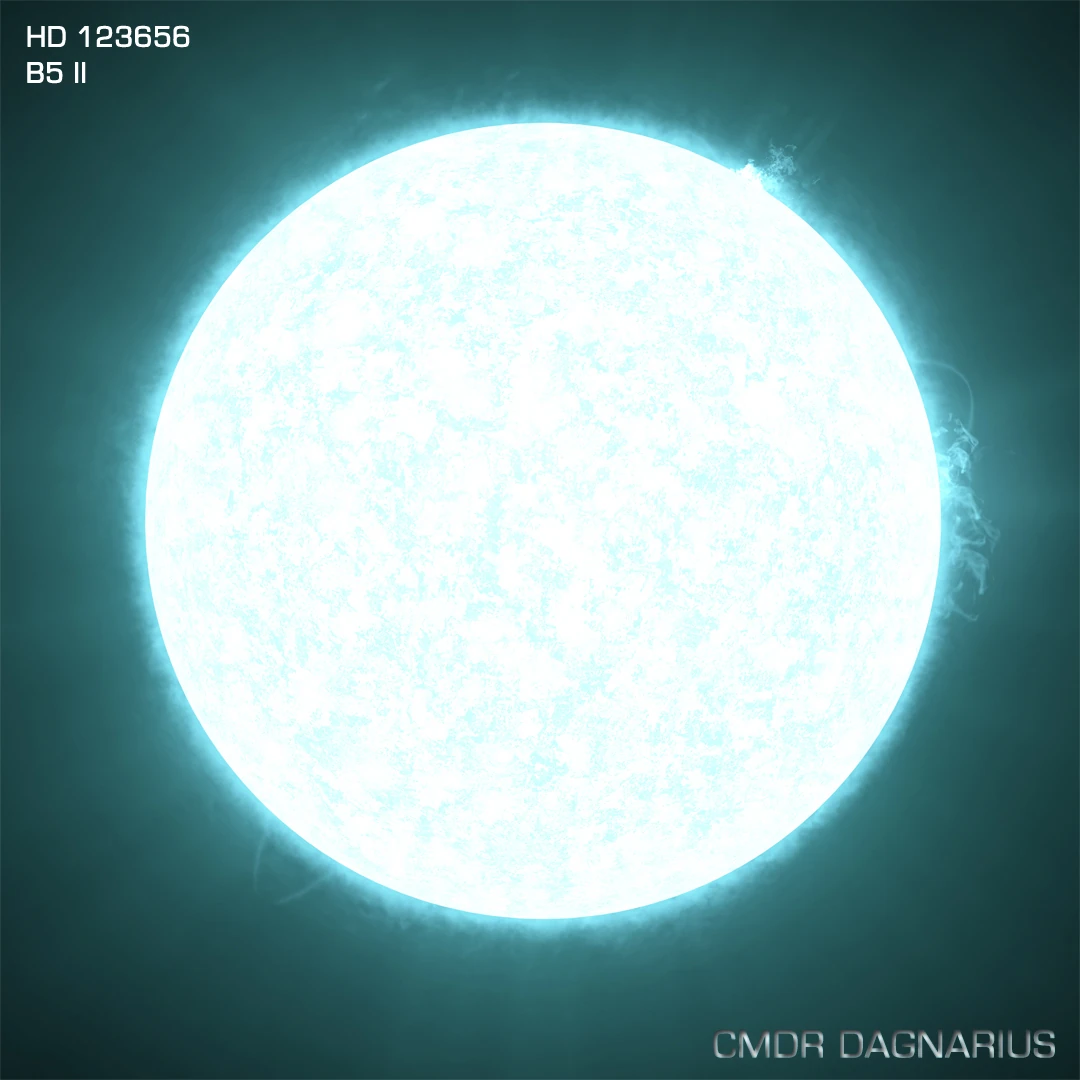 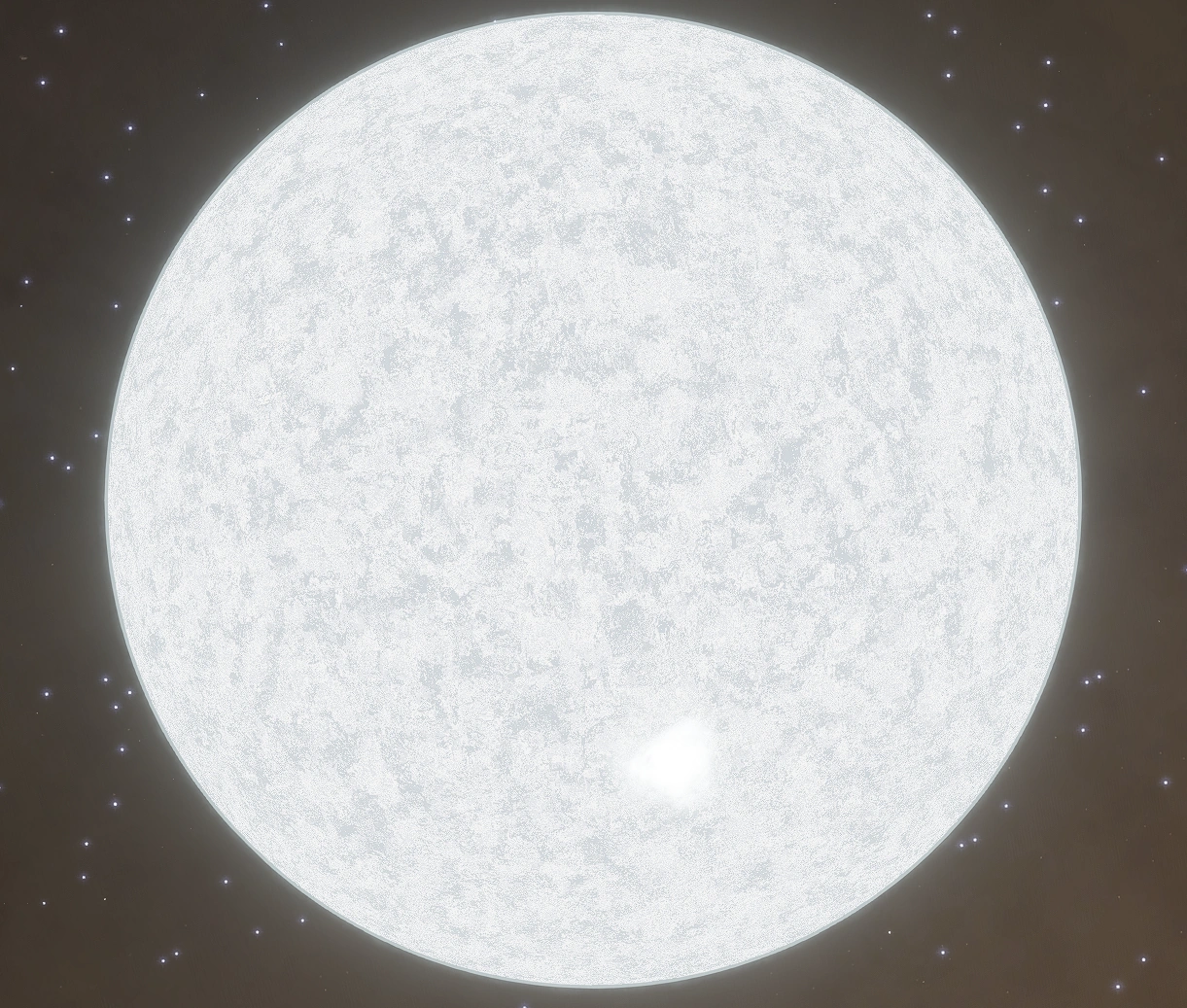 |
| F White Supergiant | Class F white supergiant star. It is approaching the end of its life and hydrogen burning has stopped in its core, and the star has begun expanding into a red supergiant. | Yes | Rare (~2.1%) | 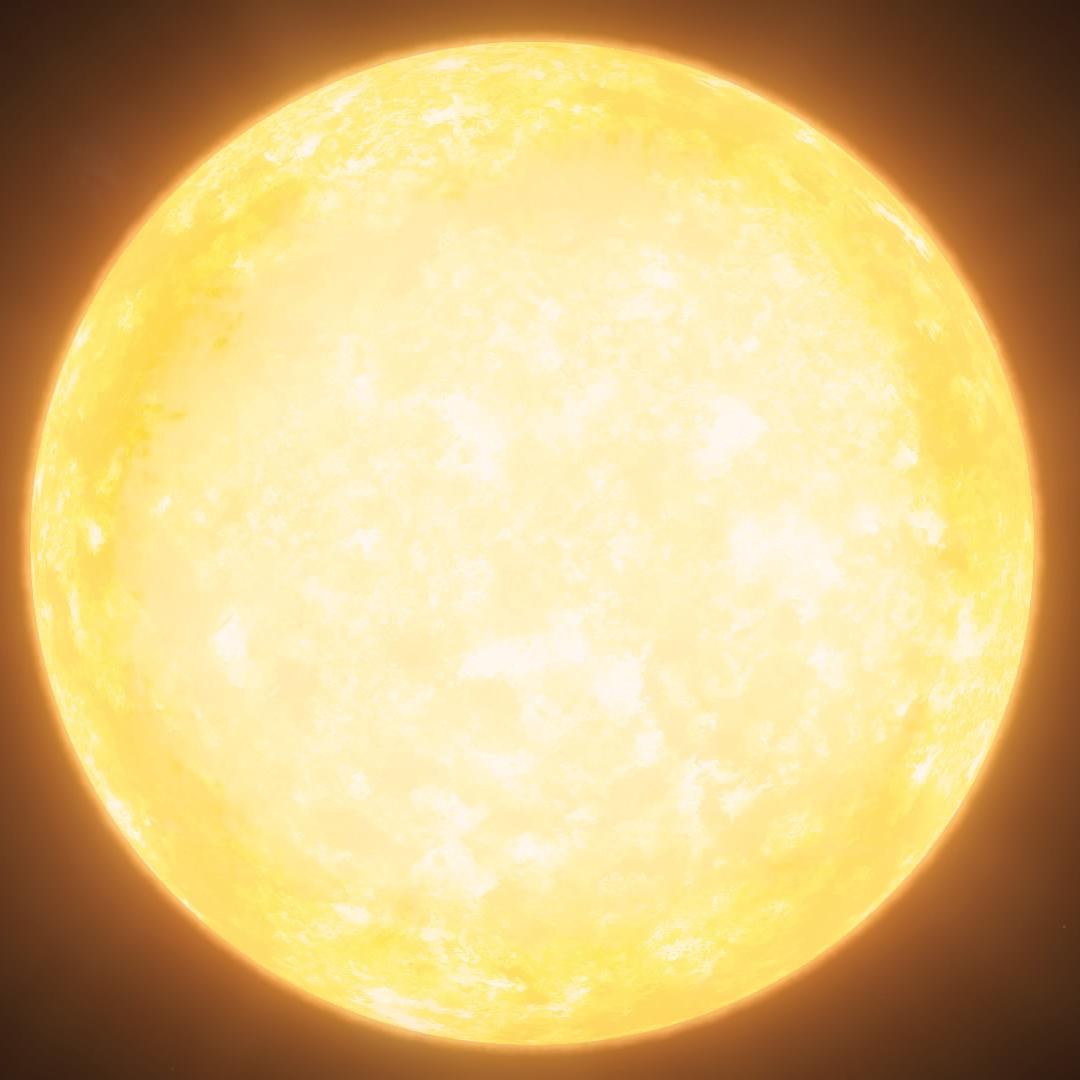 |
| G White-Yellow Supergiant | Class G yellow-white supergiant star. It is approaching the end of its life and hydrogen burning has stopped in its core, and the star has begun expanding towards being a red supergiant. | Yes | Rare (~1.6%) | 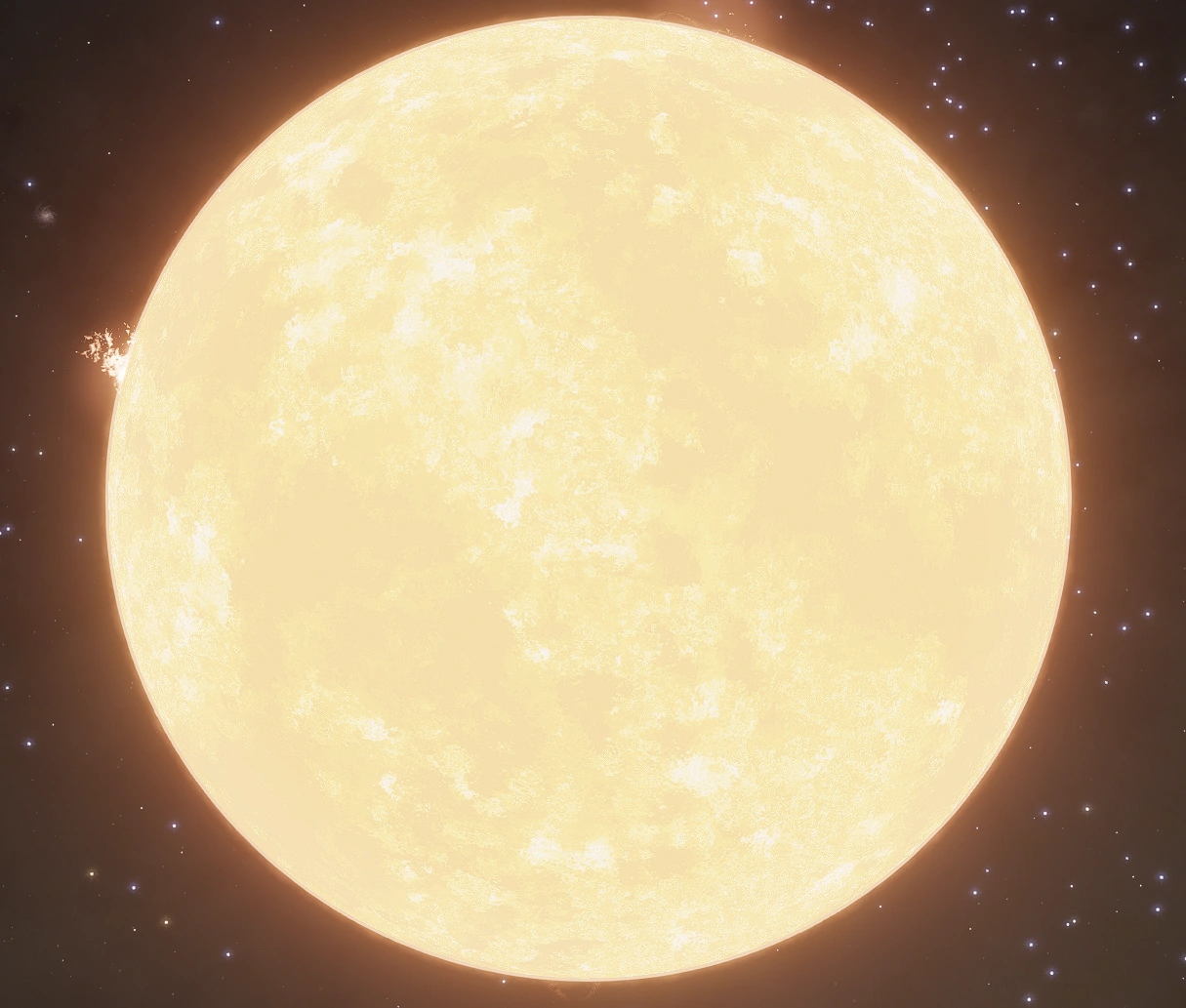 |
| K Orange Giant | Orange giant stars with spectral type K. Orange giants like this are reaching the end of their lives, and have moved off the main sequence. Hydrogen has stopped fusing in the core, leaving a collapsed core of degenerate helium, and hydrogen burning is taking place in an outer shell as the star continues to expand. | Yes | Common (~20%) | 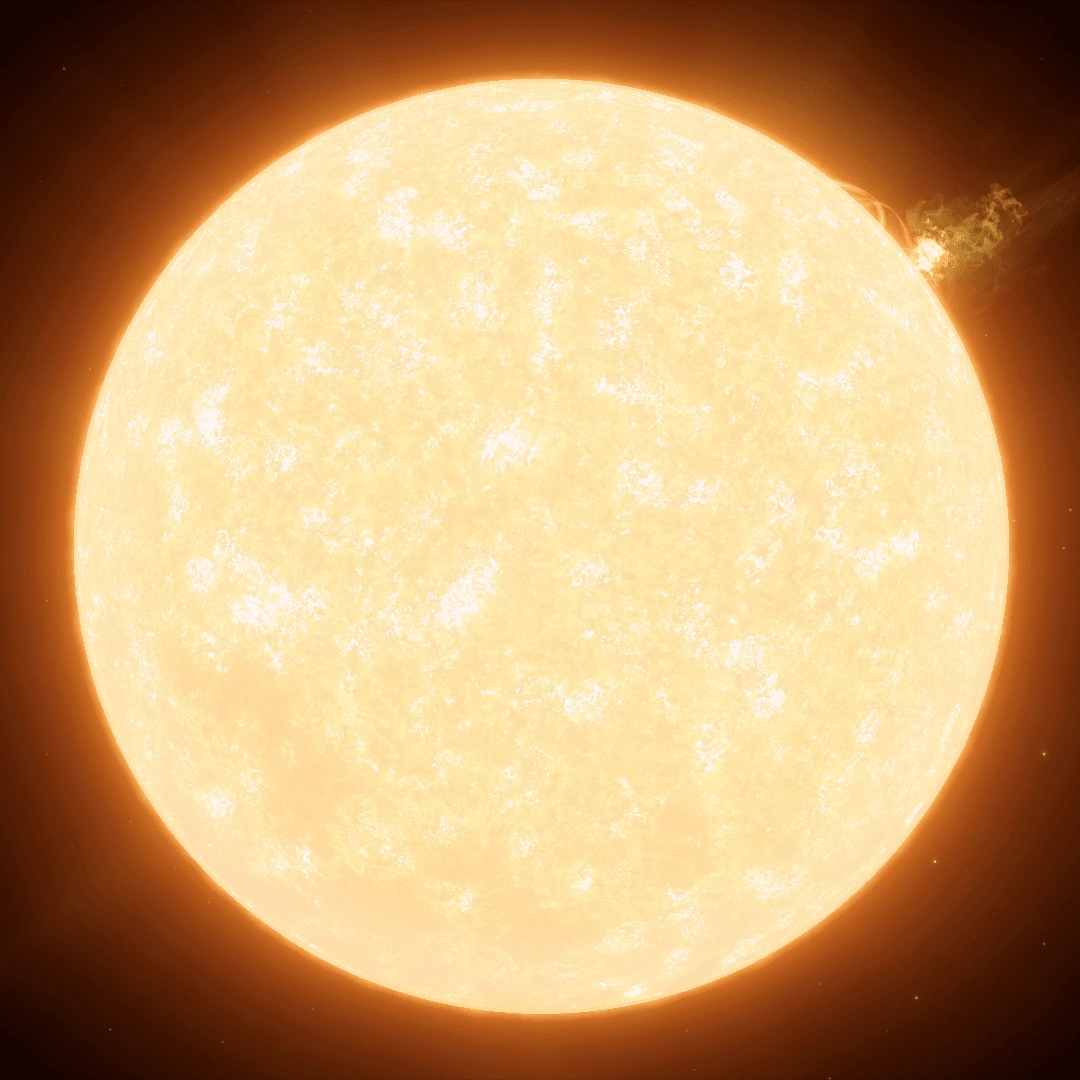 |
| M Red Giant | Red giants are in the latter part of their lives. Hydrogen has stopped fusing in their degenerate helium cores and has moved to an outer shell, causing the star to expand. The outer atmosphere is inflated and tenuous, and the surface temperature is below 5,000 K. | Yes | Very Common (~64%) | 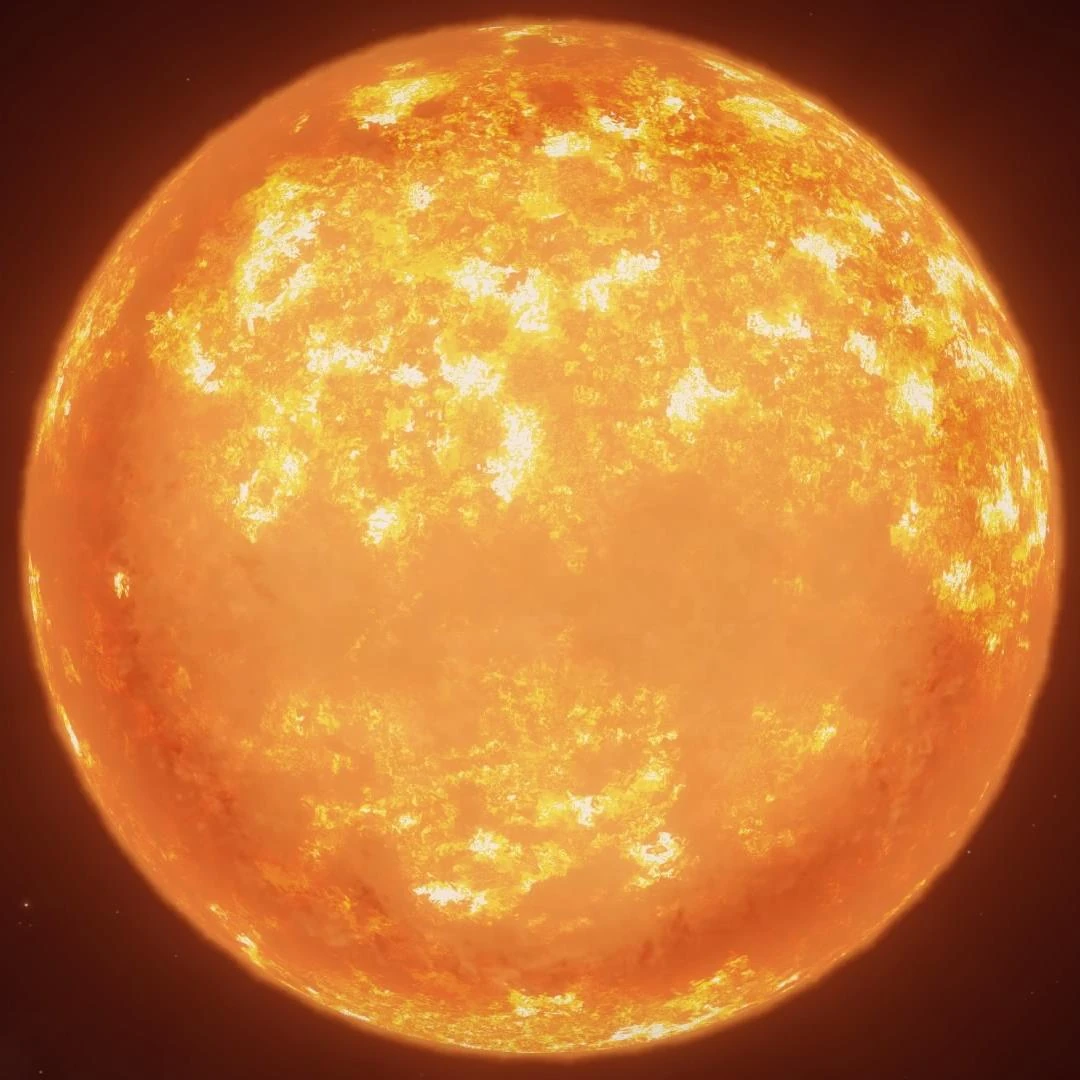 |
| M Red Supergiant | Red supergiants are massive stars near the end of their lives. They have entered a helium burning phase, where helium is fused into carbon and oxygen. they have enormous sizes swelling up to many hundred solar diameters - up to 7 AU in some cases. their out reaches can be quite cool - typically 3500-4500 K. | Yes | Rare (~1.4%) | 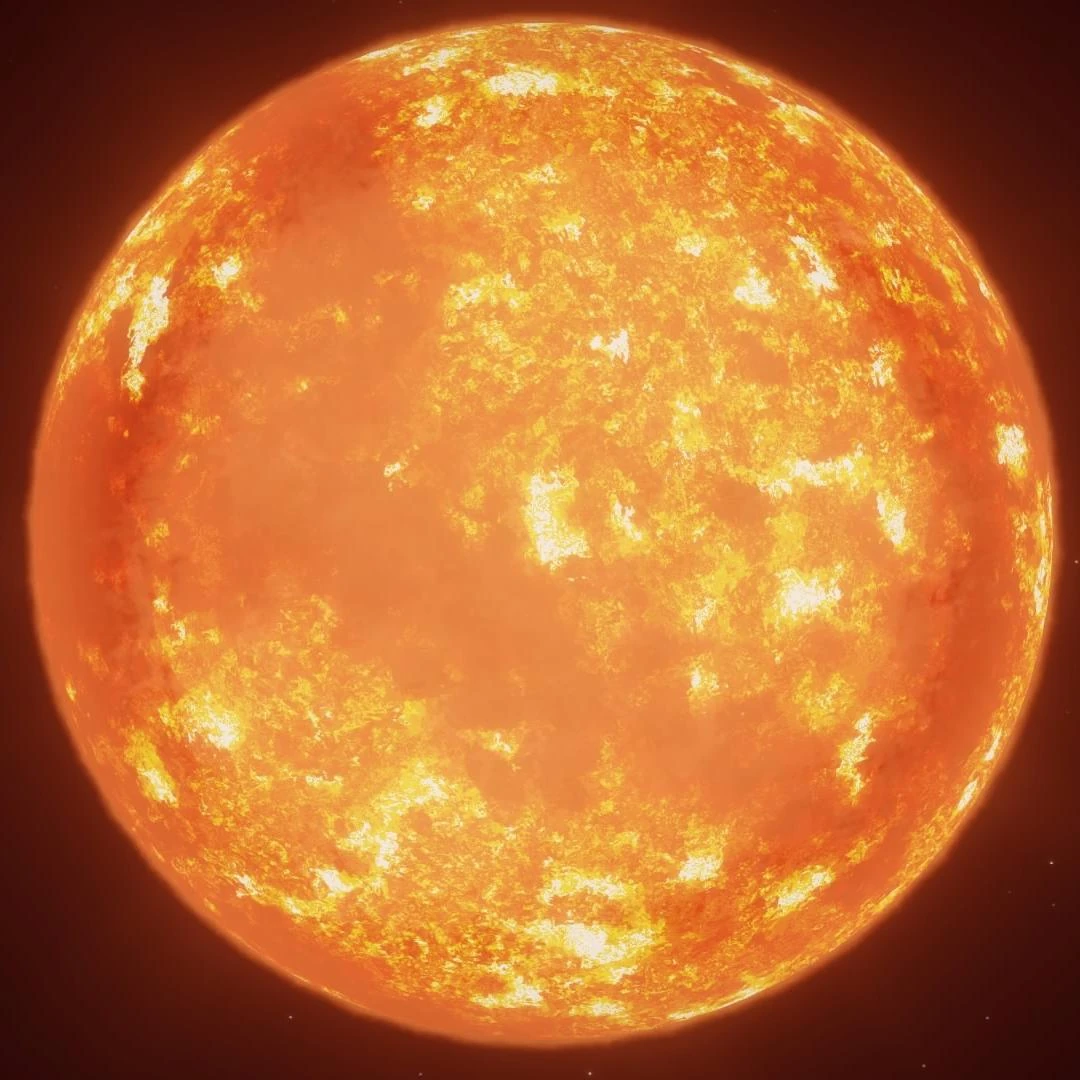 |
Proto Stars (Herbig Ae/Be, TTS)
| Class | Description / Notes | Fuel-Scoopable | Rarity Within Type | Image |
|---|---|---|---|---|
| Herbig Ae/Be | Herbig Ae/Be stars are young stars typically less than 10 million years old with characteristics of either A or B class main sequence stars. They are usually between 2 and 8 solar masses. The mass of the proto-star determines its spectral class when it joins the main sequence. Herbig Ae/Be stars are more common nearer the galactic core. | No | Rare (~4%) | 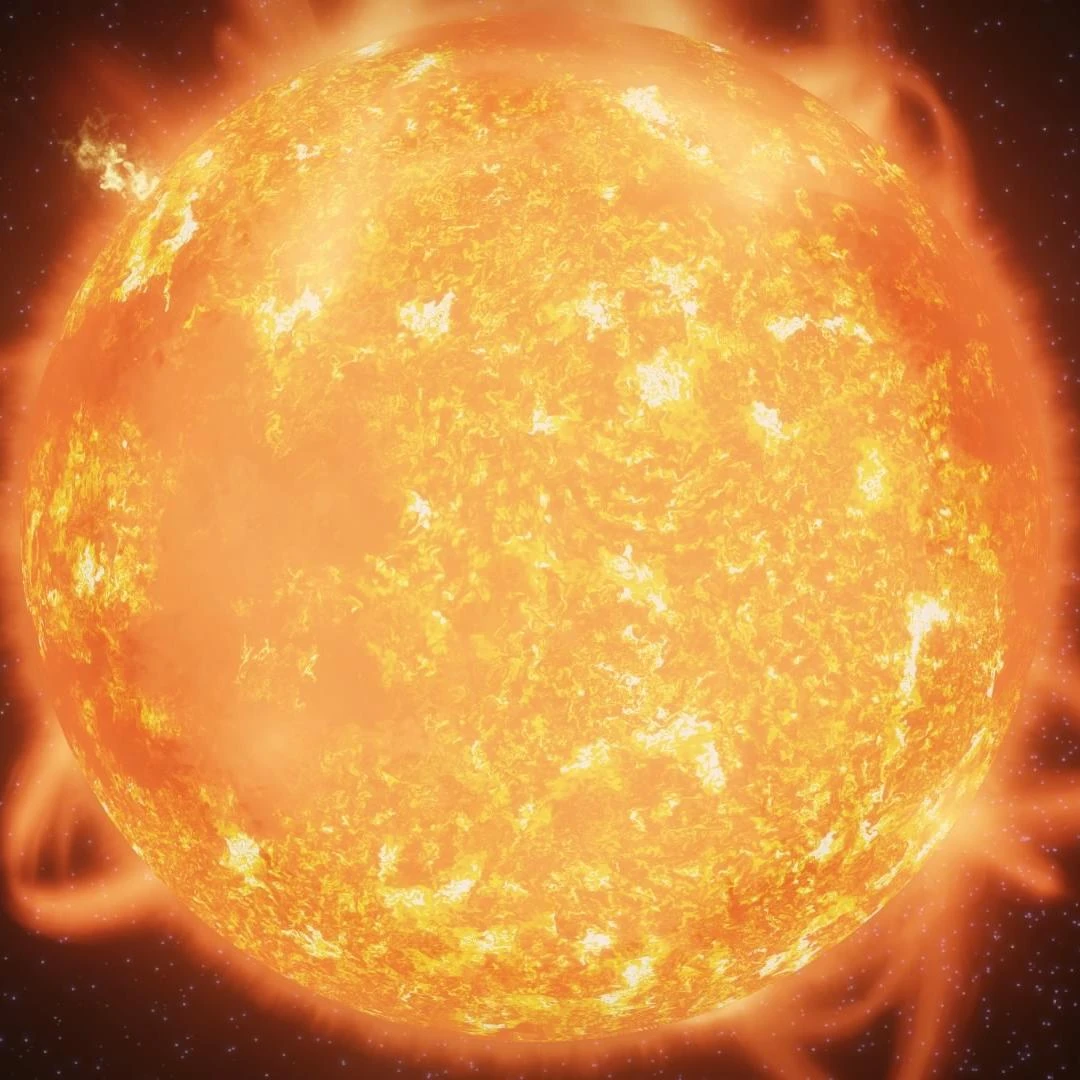 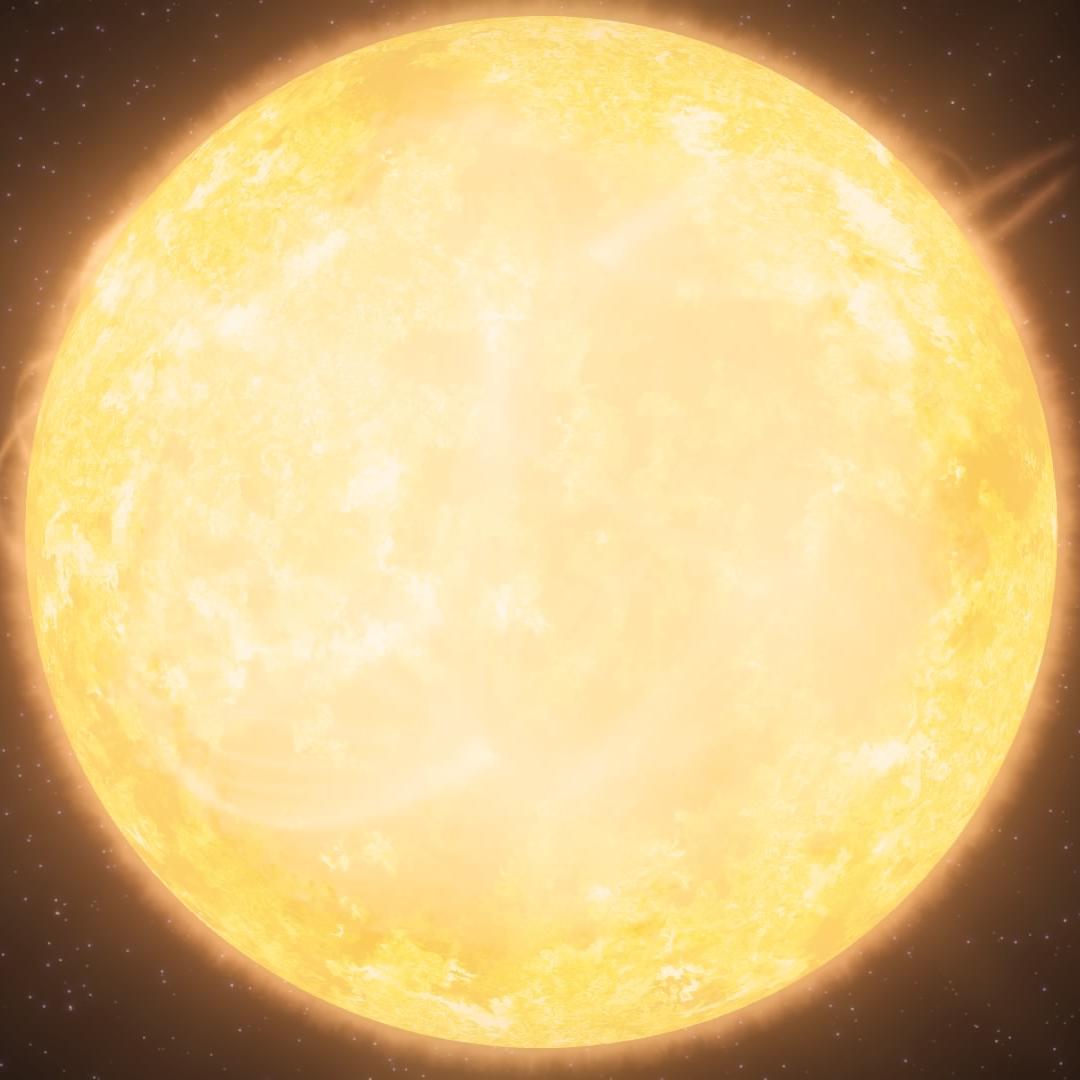 |
| TTS | T Tauri type stars are very young stars which are in the process of gravitational contraction. Take caution when travelling and using a fuel scoop, as the TTS’ appearance often resembles M or K stars. | No | Very Common (~96%) | 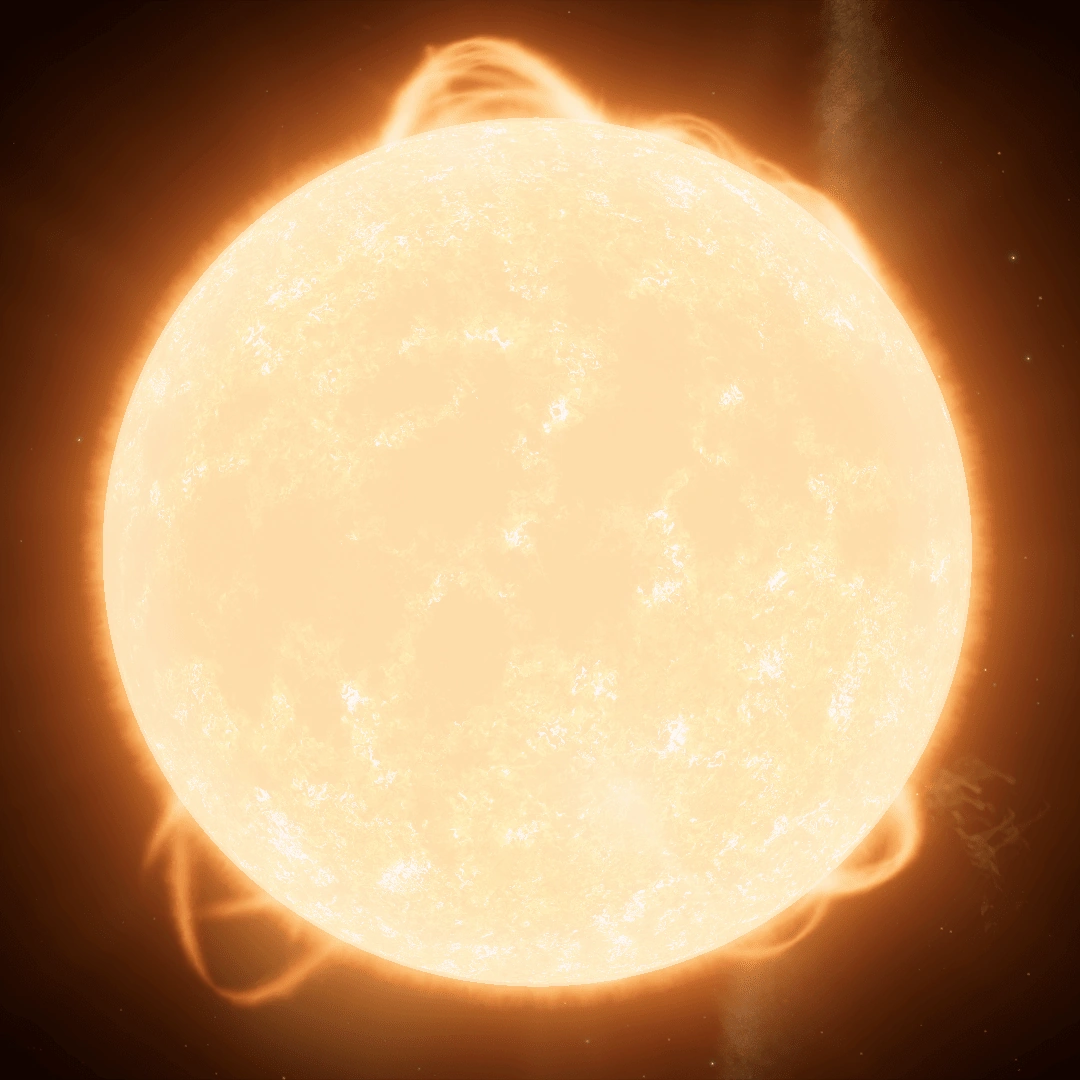 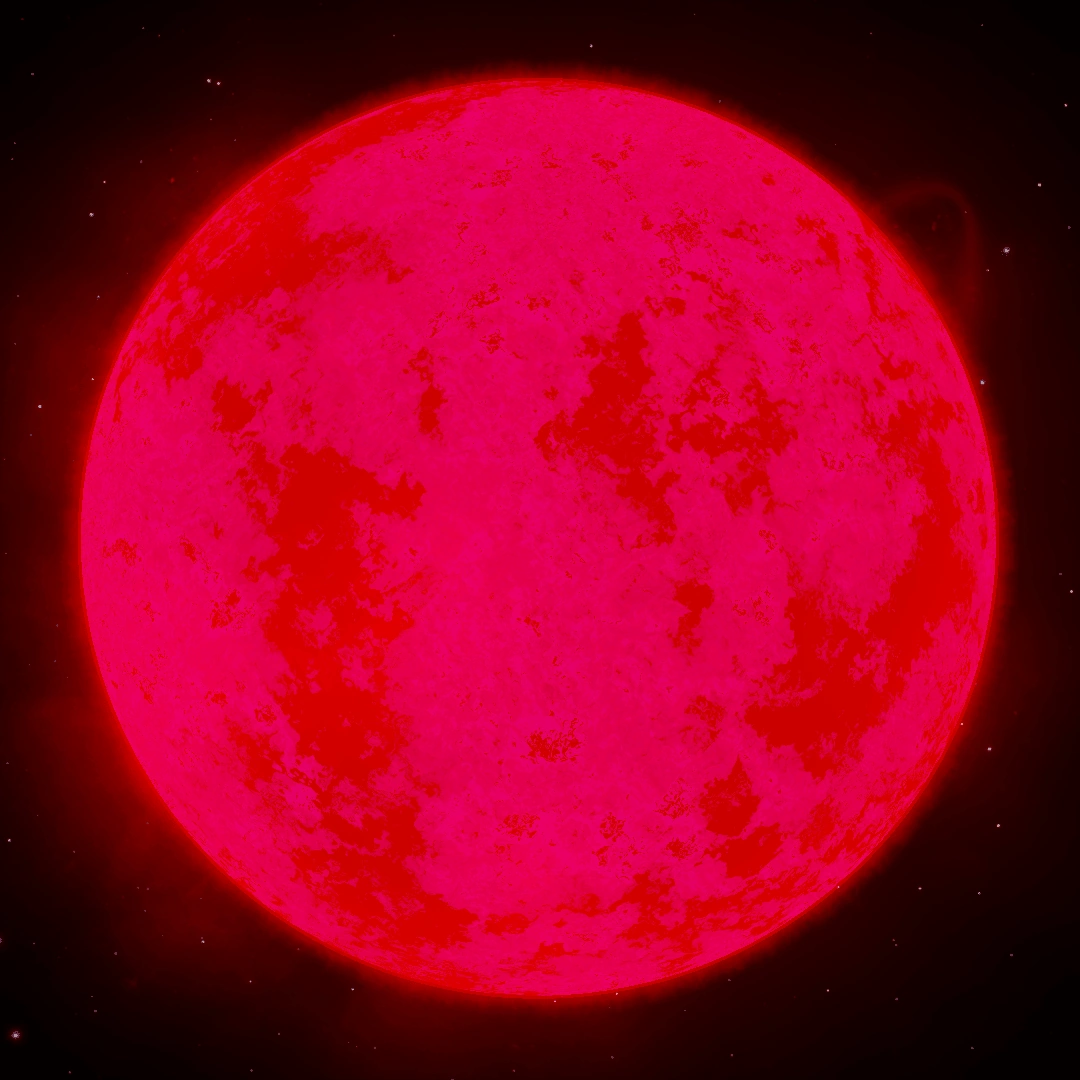 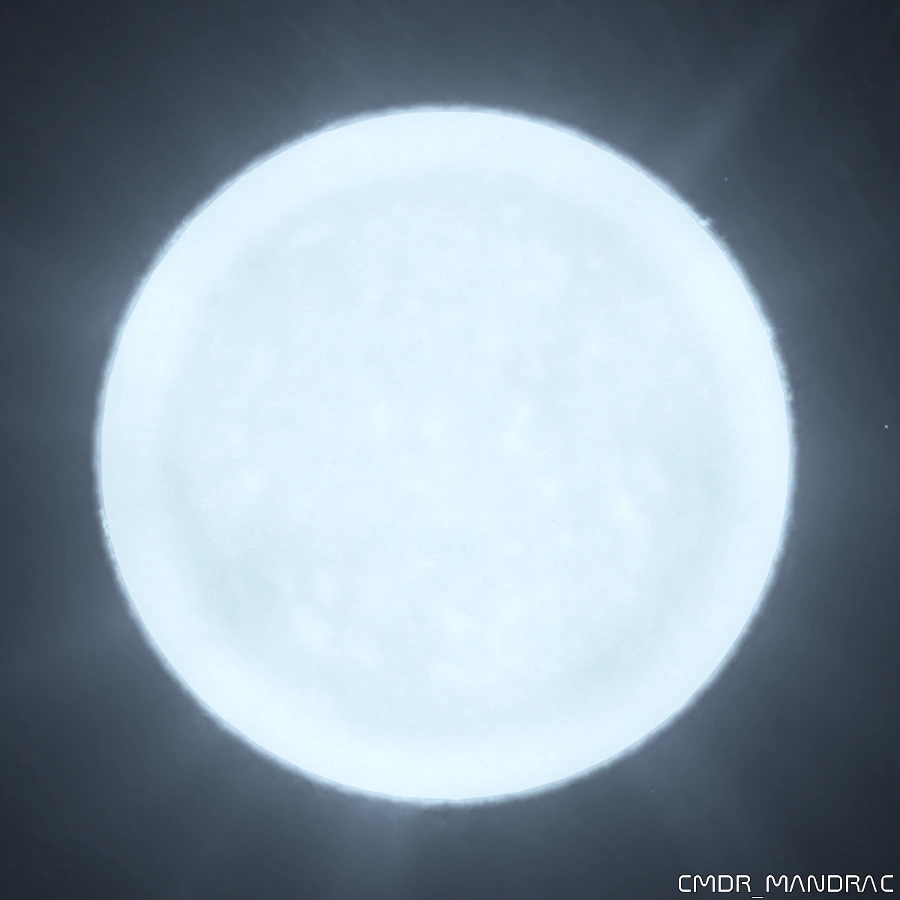 |
Carbon Stars (C, CH, CHd, CJ, CN, CS, MS, S)
| Class | Description / Notes | Fuel-Scoopable | Rarity Within Type | Image |
|---|---|---|---|---|
| C | Carbon class stars are stars approaching the end of their life. A carbon star is a late-type star similar to a red giant (or occasionally to a red dwarf) whose atmosphere contains more carbon than oxygen; the two elements combine in the upper layers of the star, forming carbon monoxide, which consumes all the oxygen in the atmosphere, leaving carbon atoms free to form other carbon compounds, giving the star a “sooty” atmosphere and a strikingly ruby red appearance. The surface temperature is rarely higher than 4300 K. | No | Very Rare (~0.7%) | 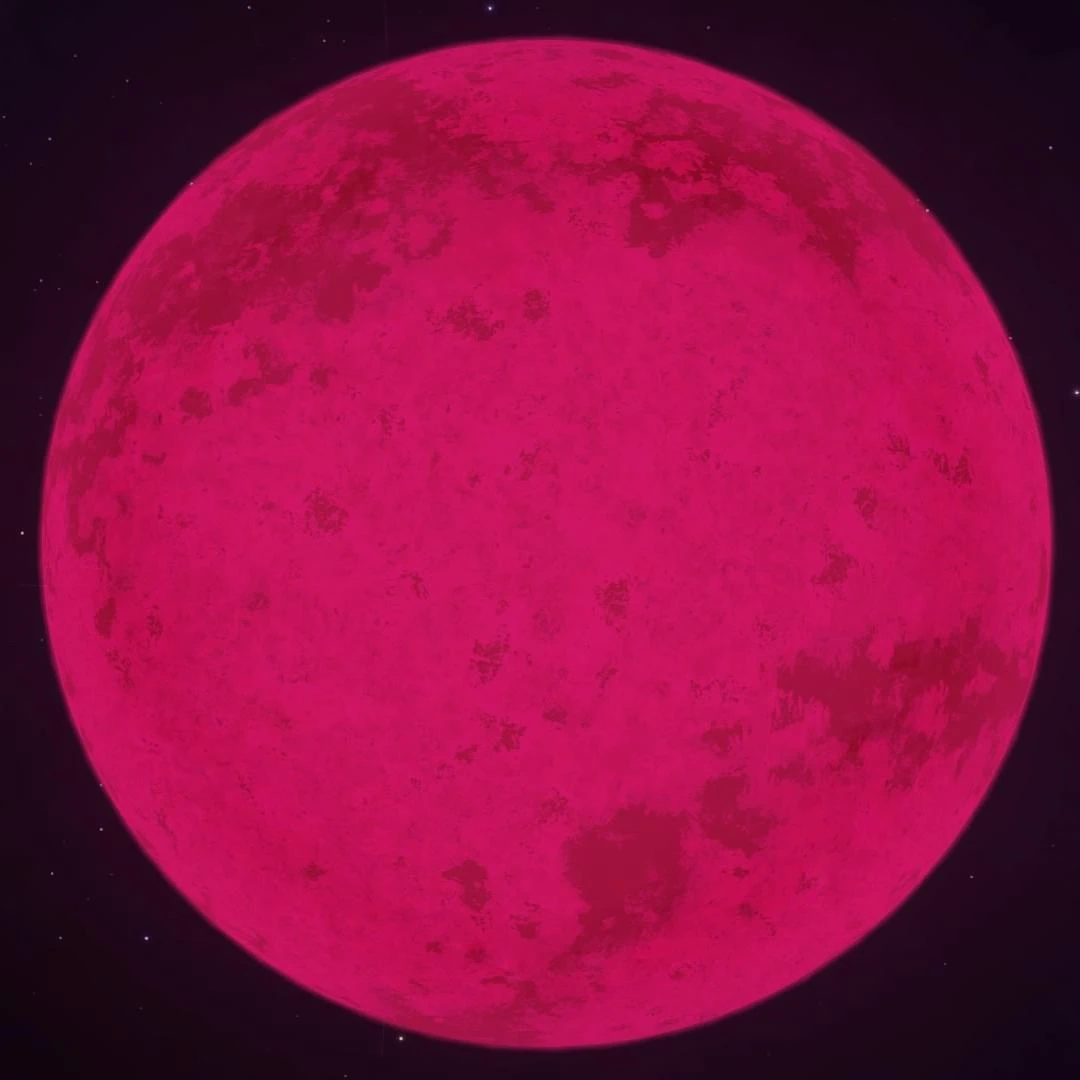 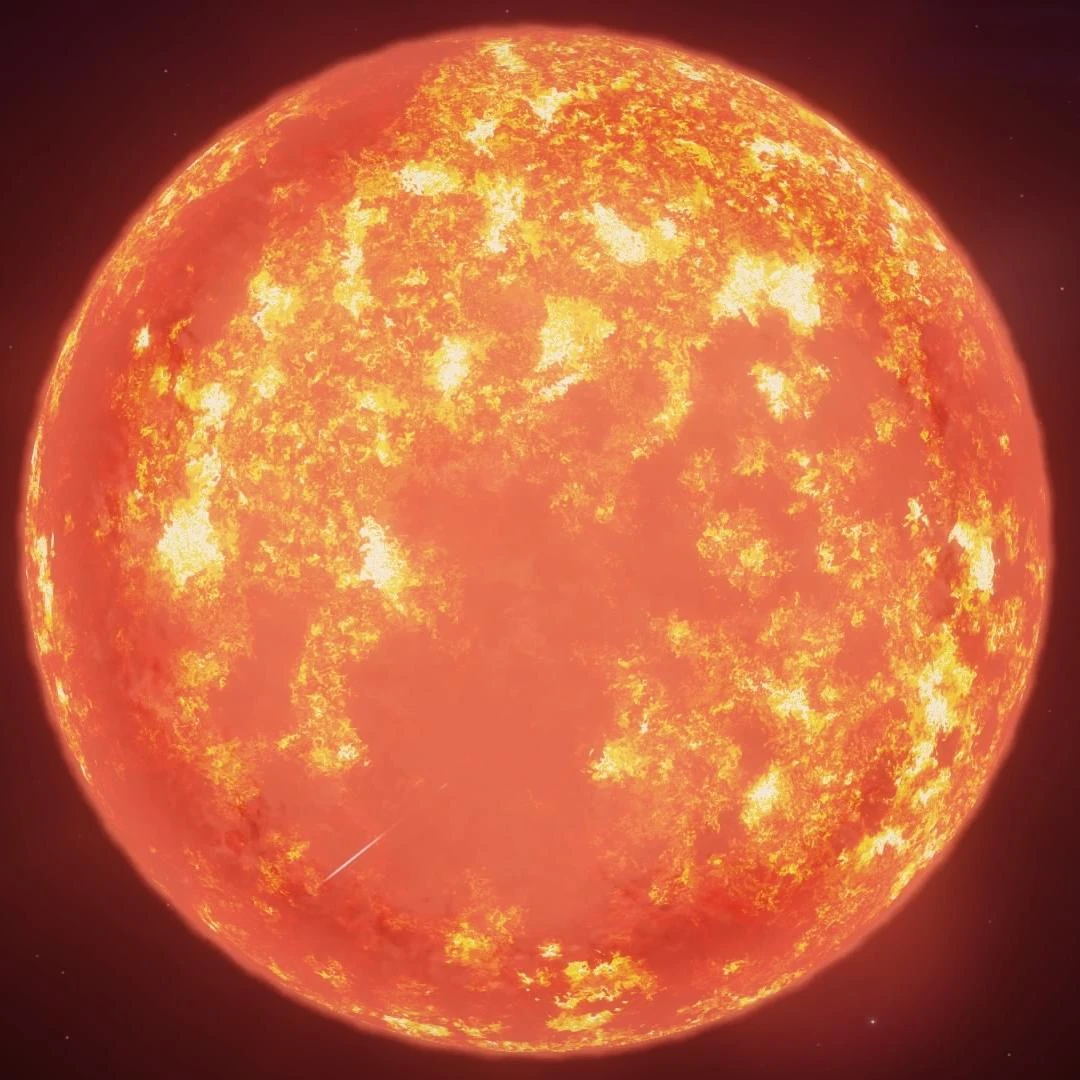 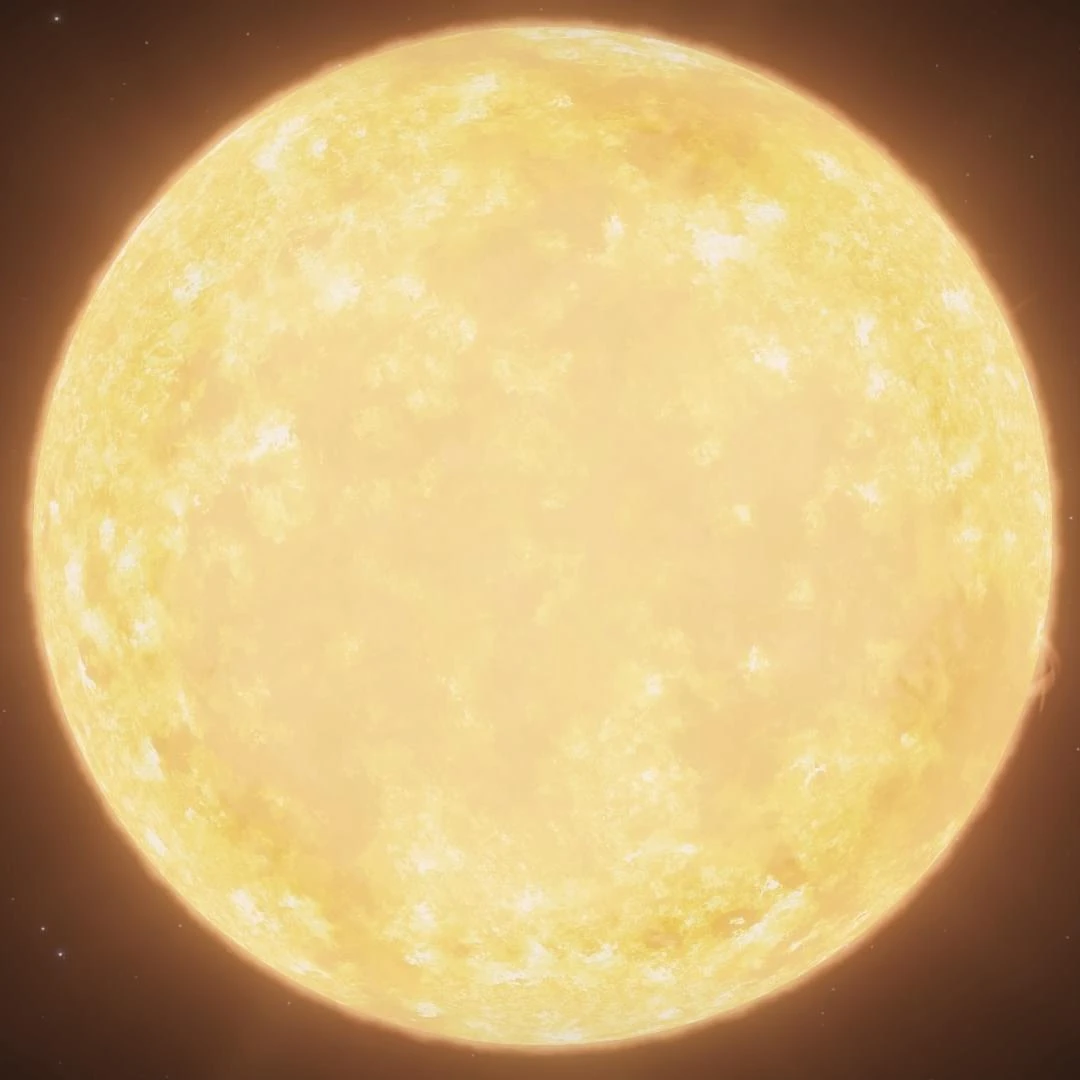 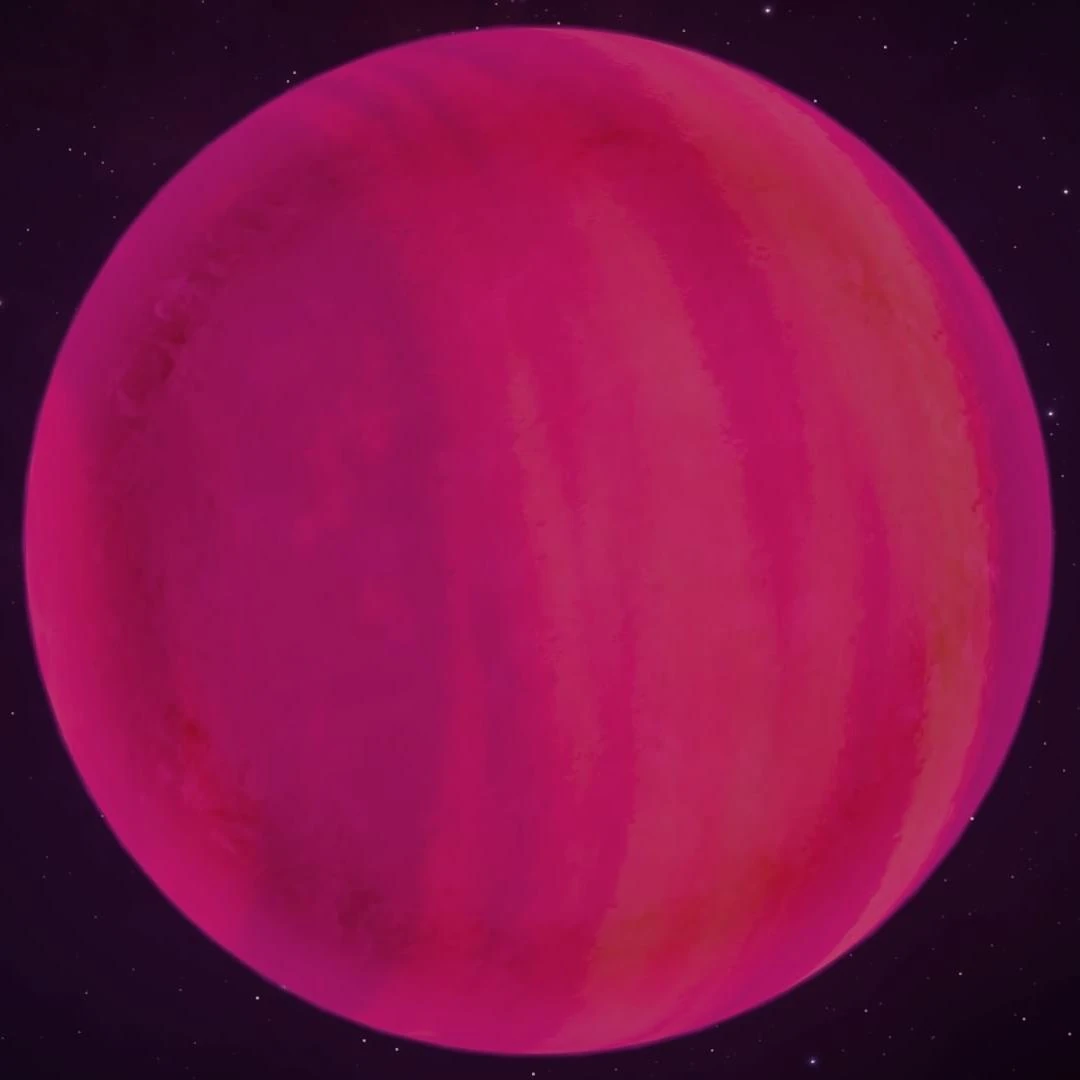 |
| CH | No | |||
| CHd | No | |||
| CJ | C-J Class stars are variants of carbon class stars, stars that are approaching the end of their stellar lives as hydrogen fusion begins to stop. This CJ variant has much more carbon-13 in its atmosphere. | No | Rare (~3%) | 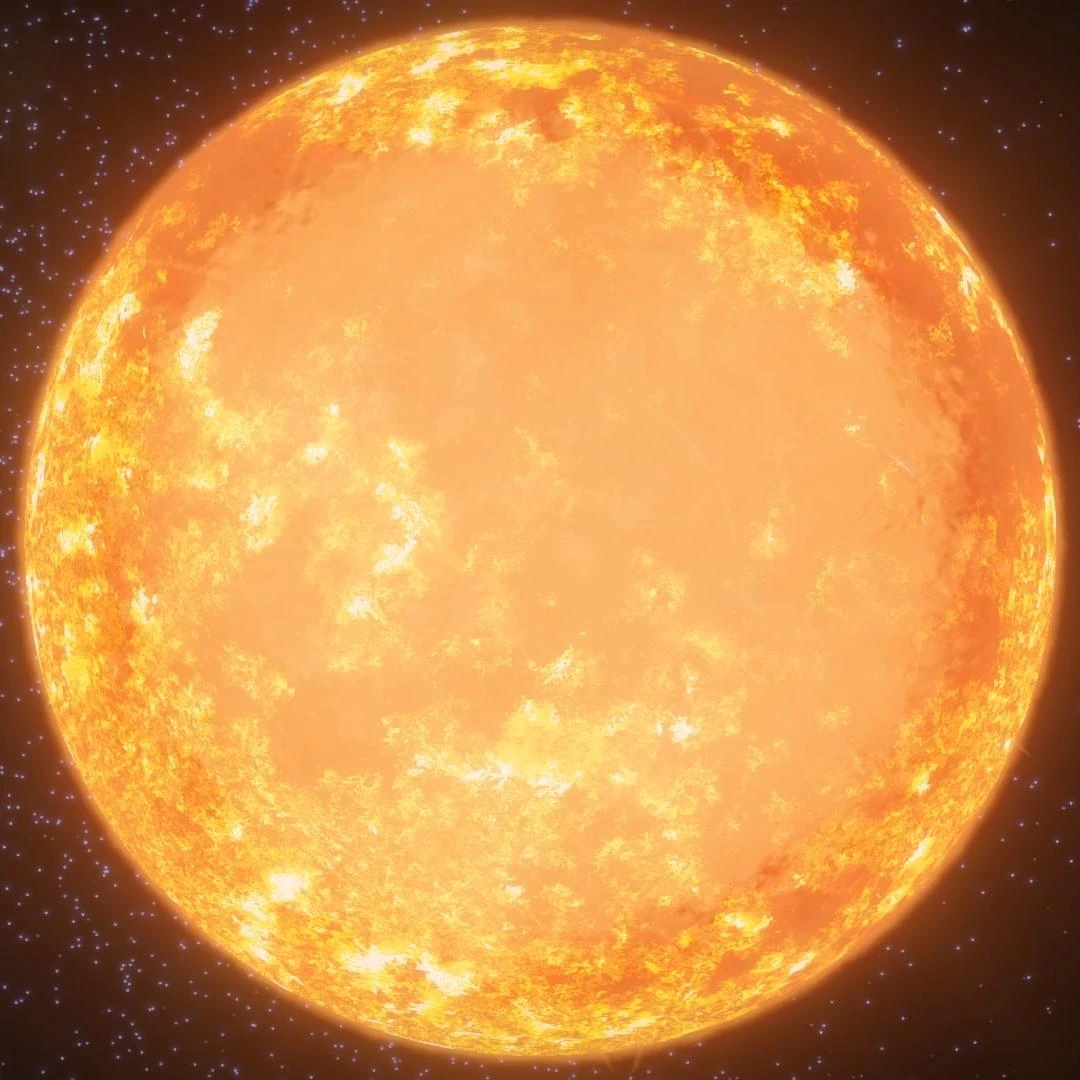 |
| CN | Class C-N stars are variants of carbon class stars, stars that are approaching the end of their stellar lives as hydrogen fusion begins to stop. They were once K or M type stars that have degenerated to the carbon phase of their life cycle. | No | Common (~24%) | 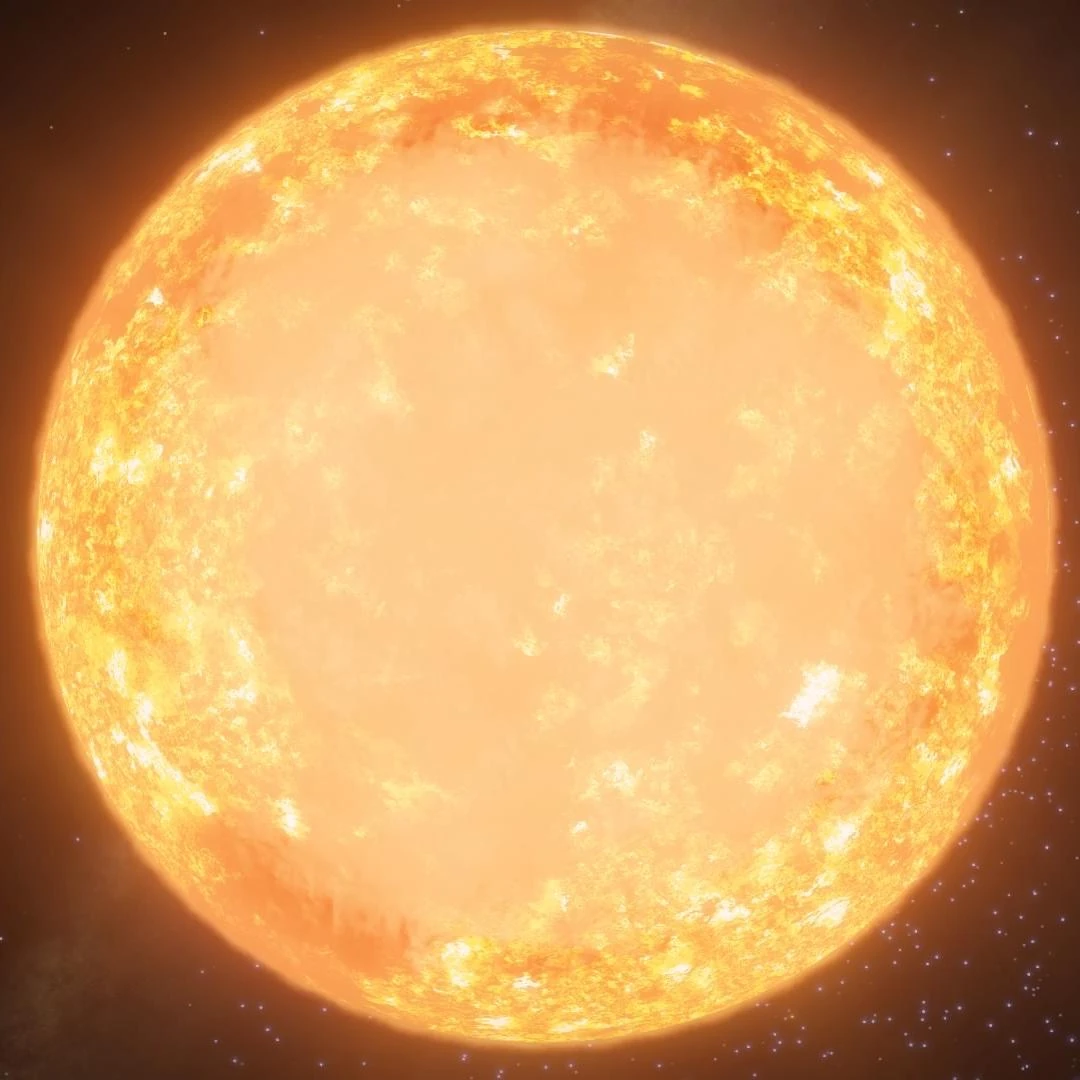 |
| CS | No | |||
| MS | MS class stars are late sequence stars having progressed from the S class stage of their life cycle and heading towards becoming a carbon star, a star nearing the end of its stellar life. | No | Very Common (~36%) | 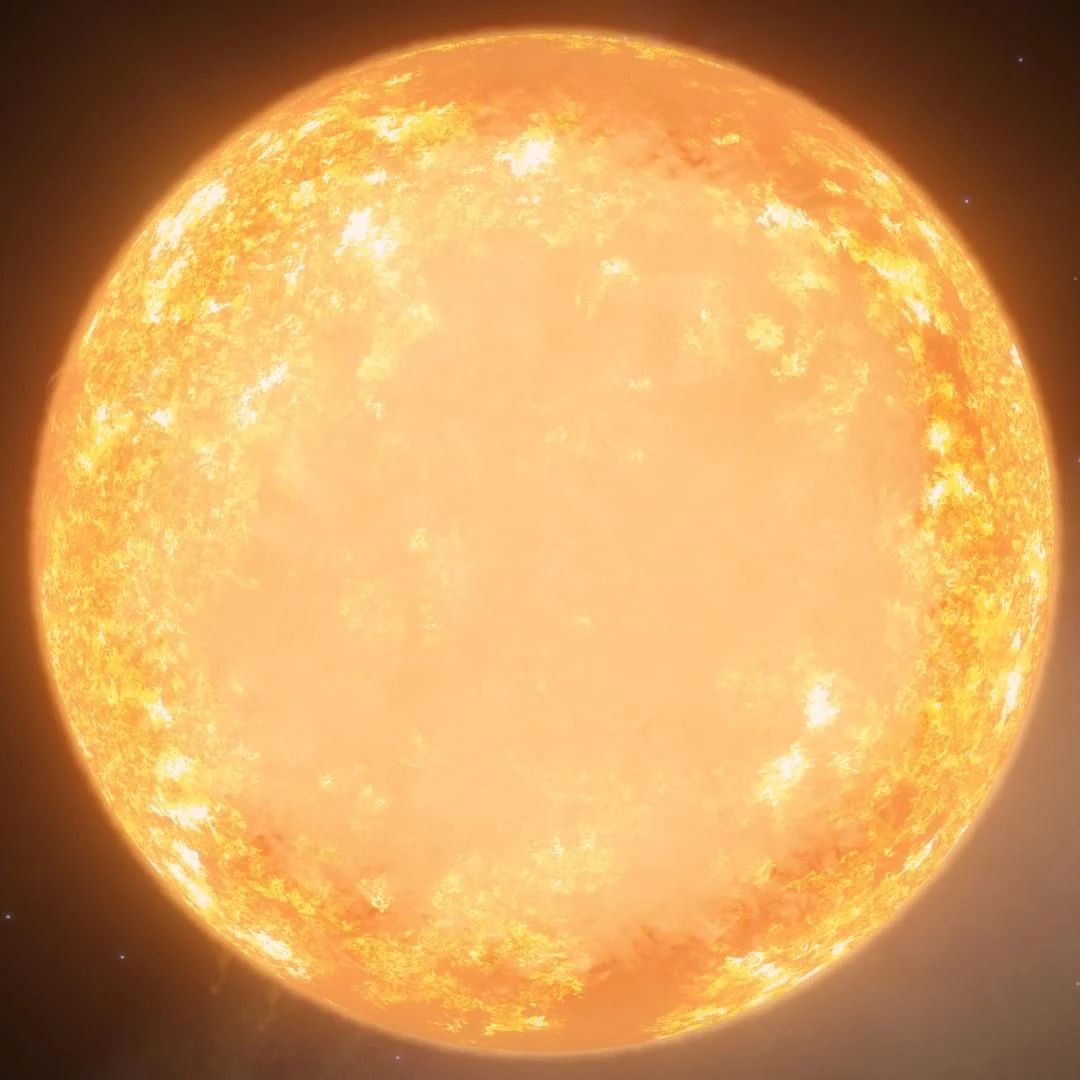 |
| S | Class S stars are a late-type giant star (similar to class K5–M) whose spectrum displays bands from zirconium oxide, in addition to the titanium oxide bands characteristically exhibited by K and M class giant stars. | No | Very Common (~37%) | 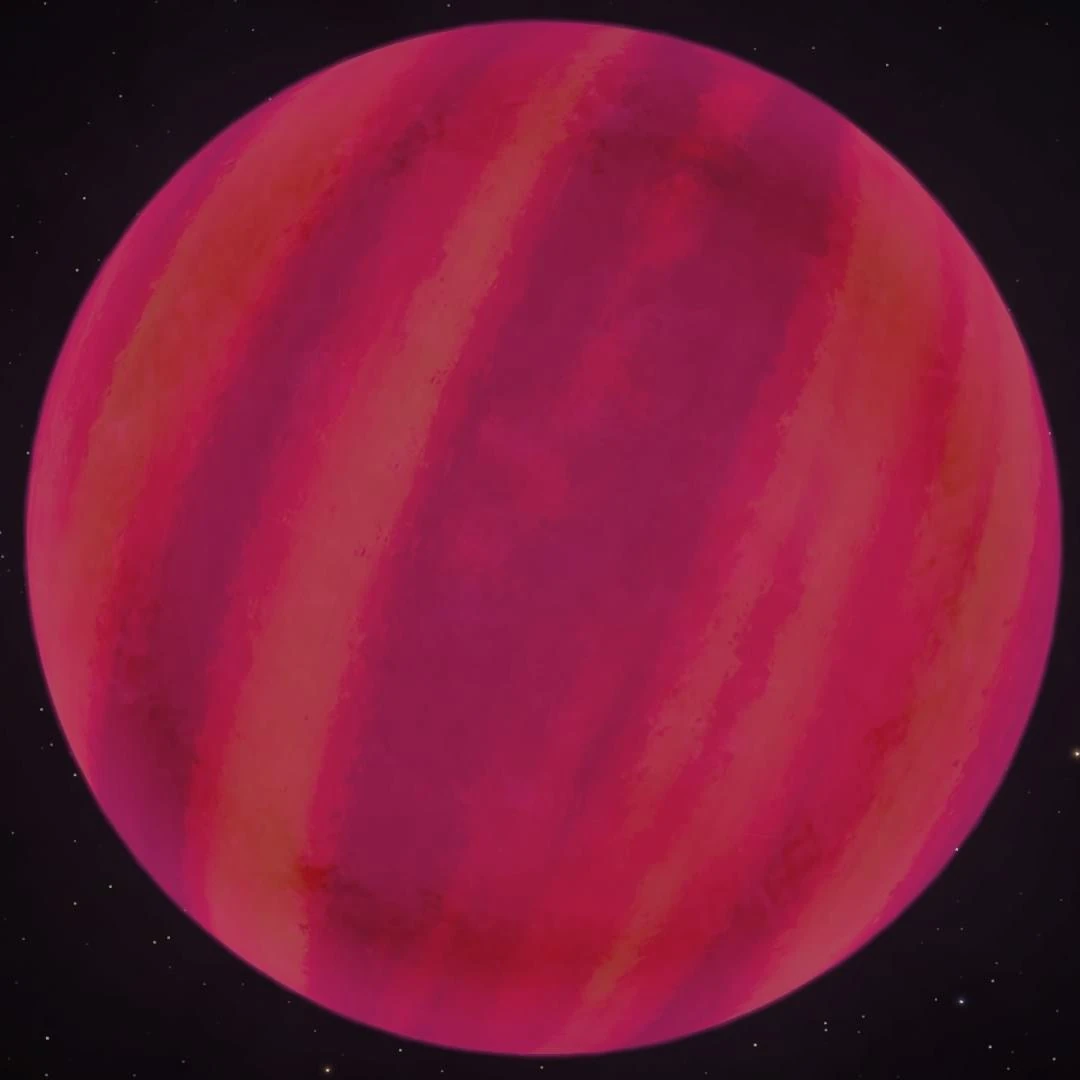 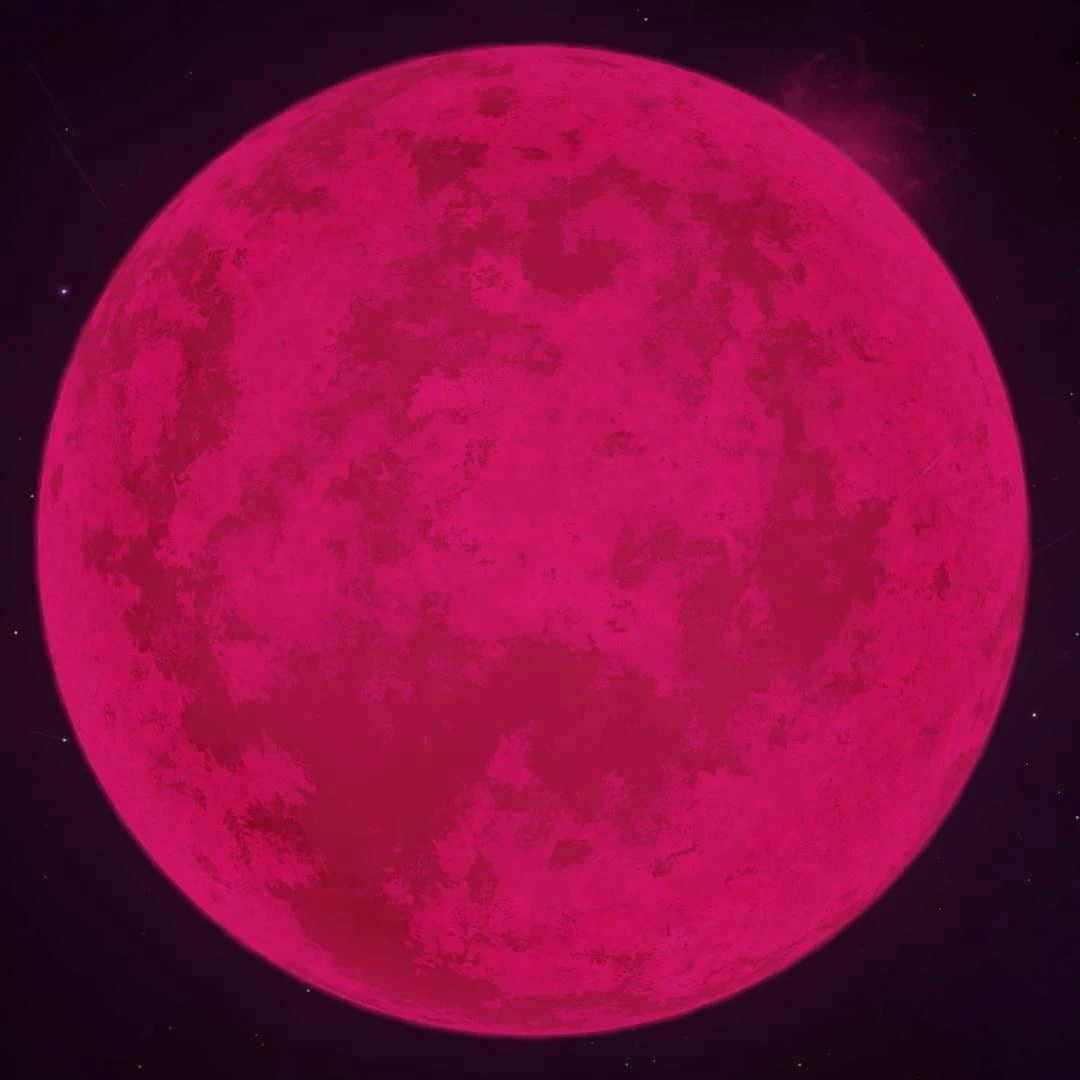 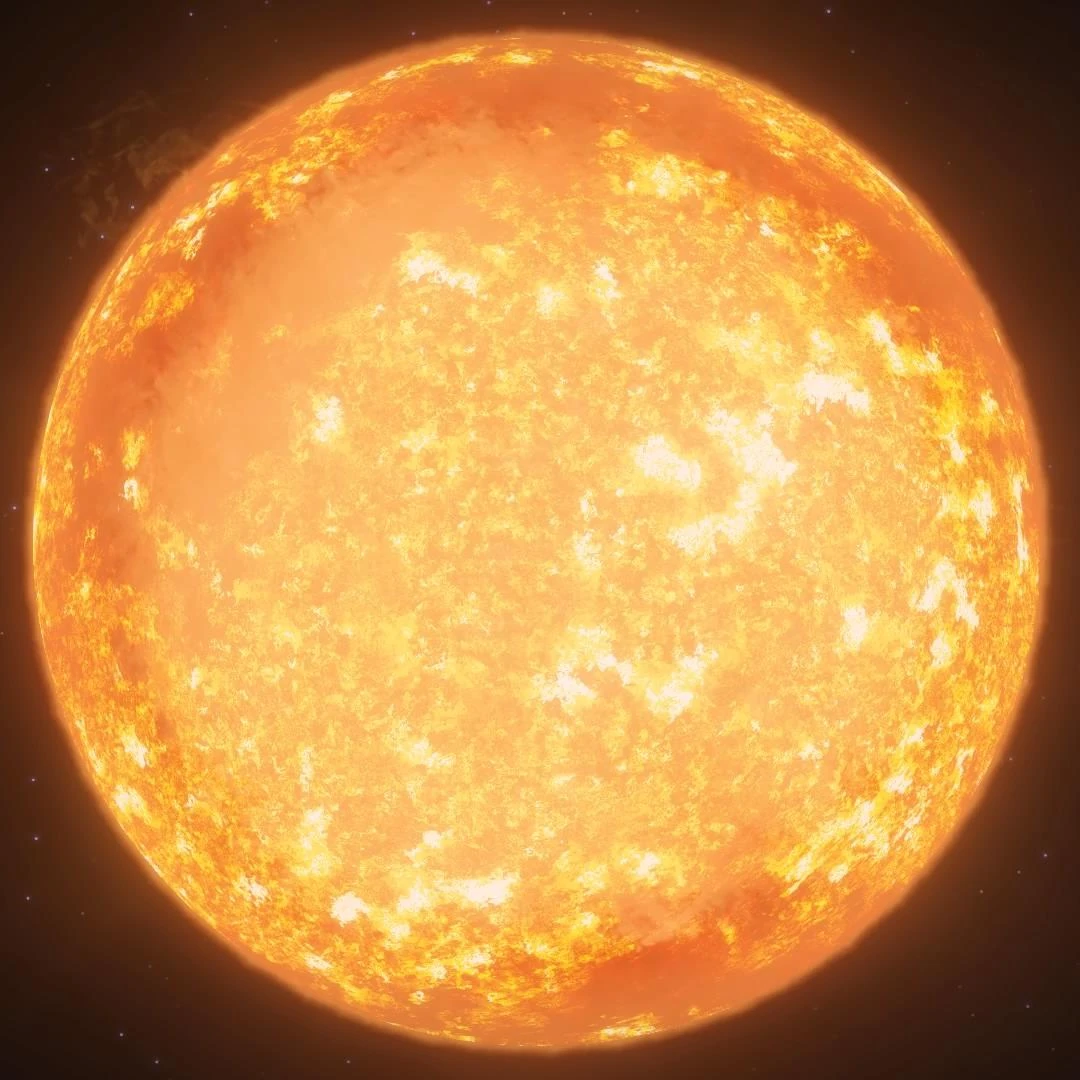 |
Wolf-Rayet Stars (W, WC, WNC, WNC, WO)
| Class | Description / Notes | Fuel-Scoopable | Rarity Within Type | Image |
|---|---|---|---|---|
| W | Wolf-Rayet class stars are massive stars that are nearing the end of their life cycle and have moved out of their hydrogen-burning phase. They were once over 20 solar masses but now shed considerable amounts of material through solar wind. Their surface temperature can reach 200,000 K, so they appear a brilliant blue. | No | Very Rare (~0.44%) | 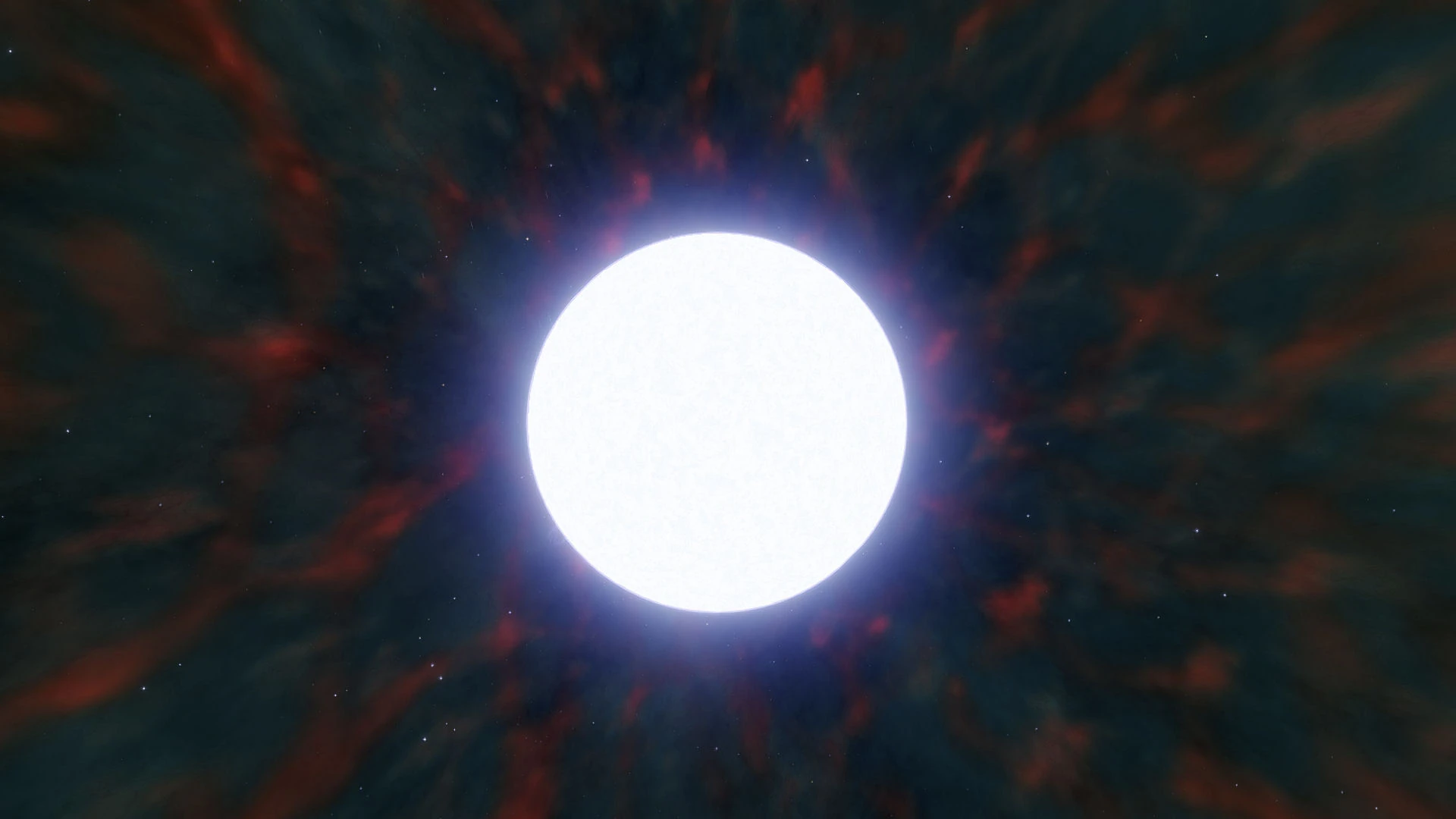 |
| WC | Wolf-Rayet class stars are massive stars that are nearing the end of their life cycle and have moved out of their hydrogen-burning phase. They were once over 20 solar masses but now shed considerable amounts of material through solar wind. Their surface temperature can reach 200,000 K, so they appear a brilliant blue. This star is a variant of the Wolf-Rayet stars whose spectrum is dominated by ionised carbon lines. | No | Common (~21%) | 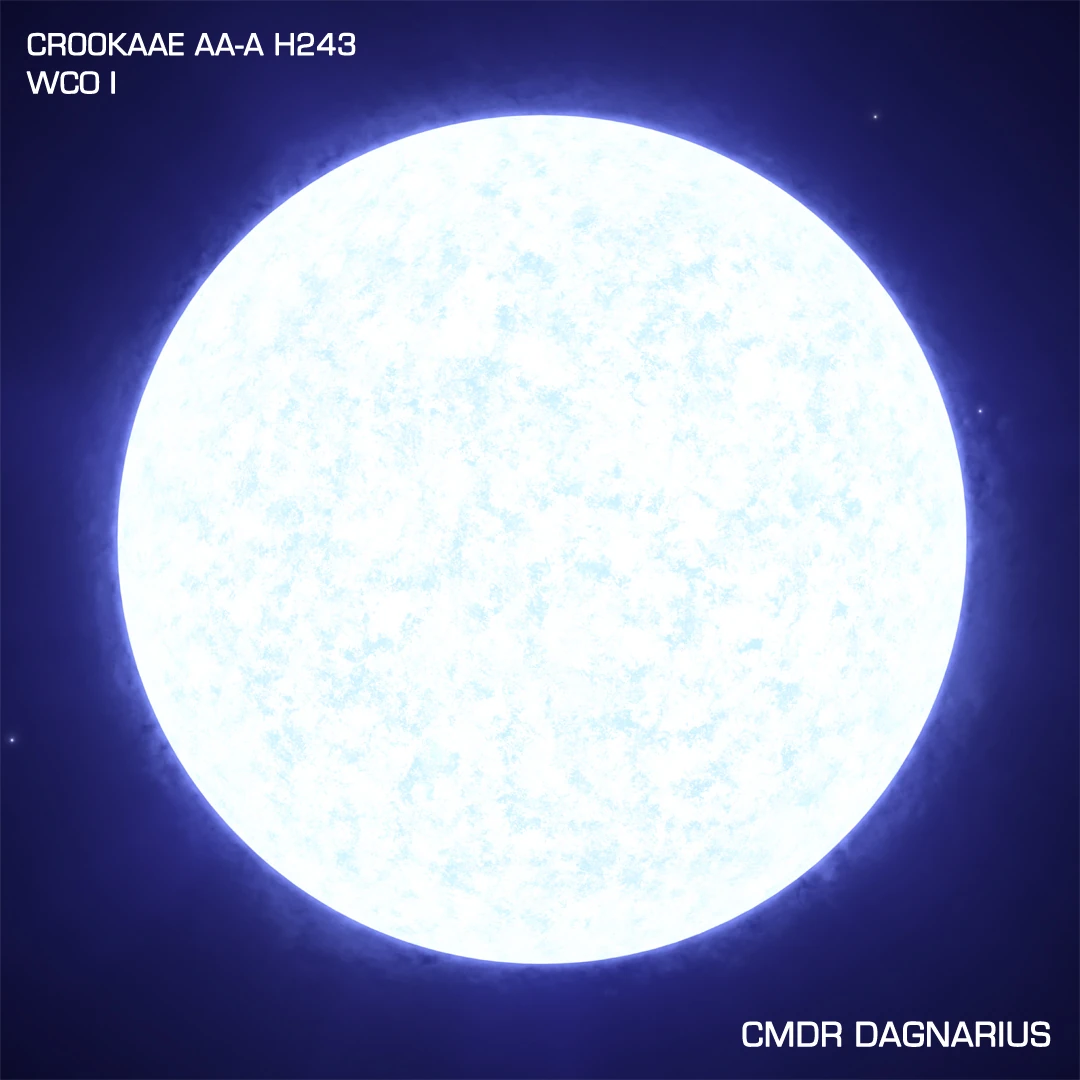 |
| WN | Wolf-Rayet class stars are massive stars that are nearing the end of their life cycle and moved out of their hydrogen-burning phase. They were once over 20 solar masses but now shed considerable amounts of material through solar wind. Their surface temperature can reach 200,000 K, so they appear a brilliant blue. This star is a variant of the Wolf-Rayet stars whose spectrum is dominated by ionised nitrogen and helium lines. | No | Common (~15%) | 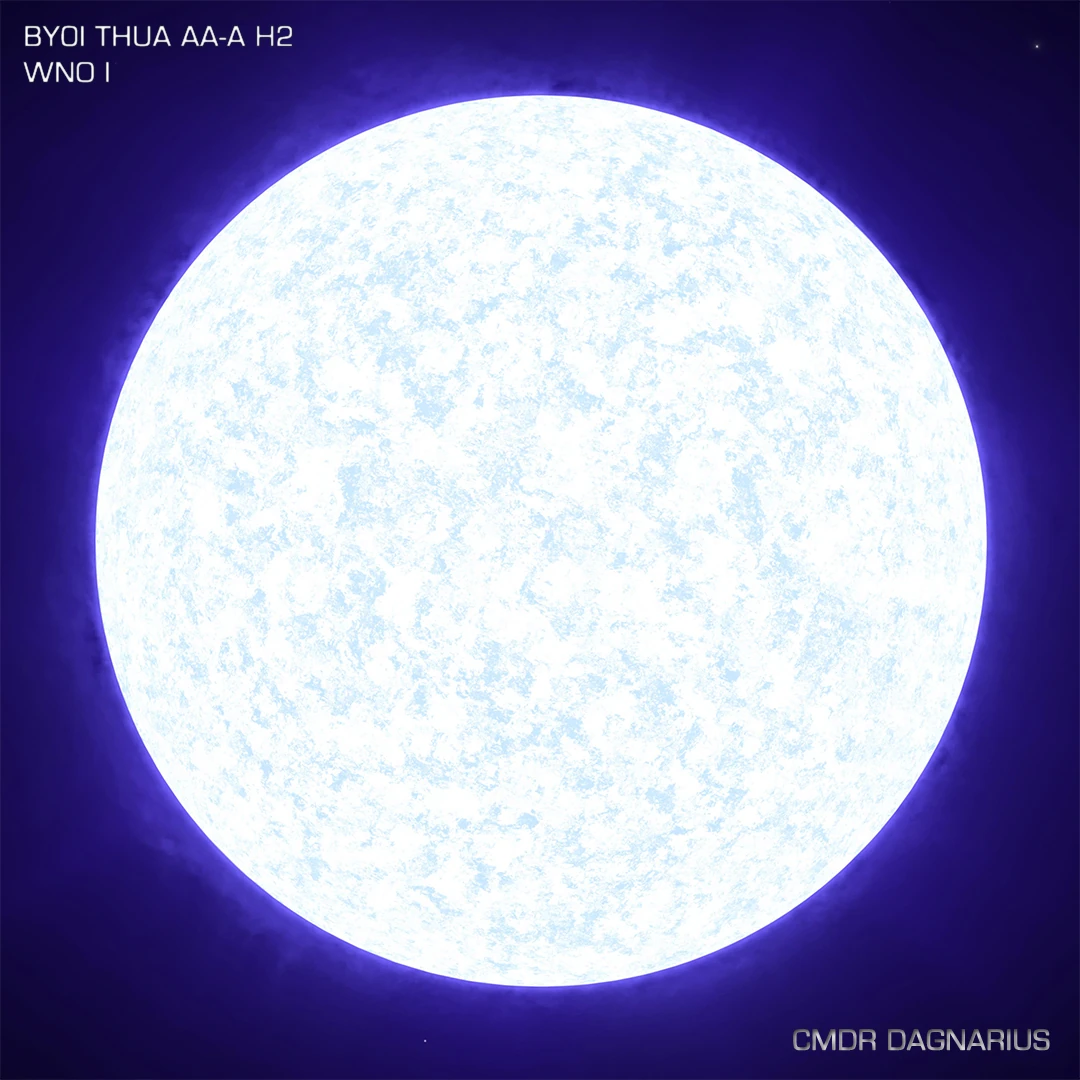 |
| WNC | Wolf-Rayet class stars are massive stars that are nearing the end of their life cycle and have moved out of their hydrogen-burning phase. They were once over 20 solar masses but now shed considerable amounts of material through solar wind. Their surface temperature can reach 200,000 K, so they appear a brilliant blue. This star is a variant of the Wolf-Rayet stars whose spectrum is dominated by ionised nitrogen, carbon-oxygen and helium lines. | No | Common (~16%) | 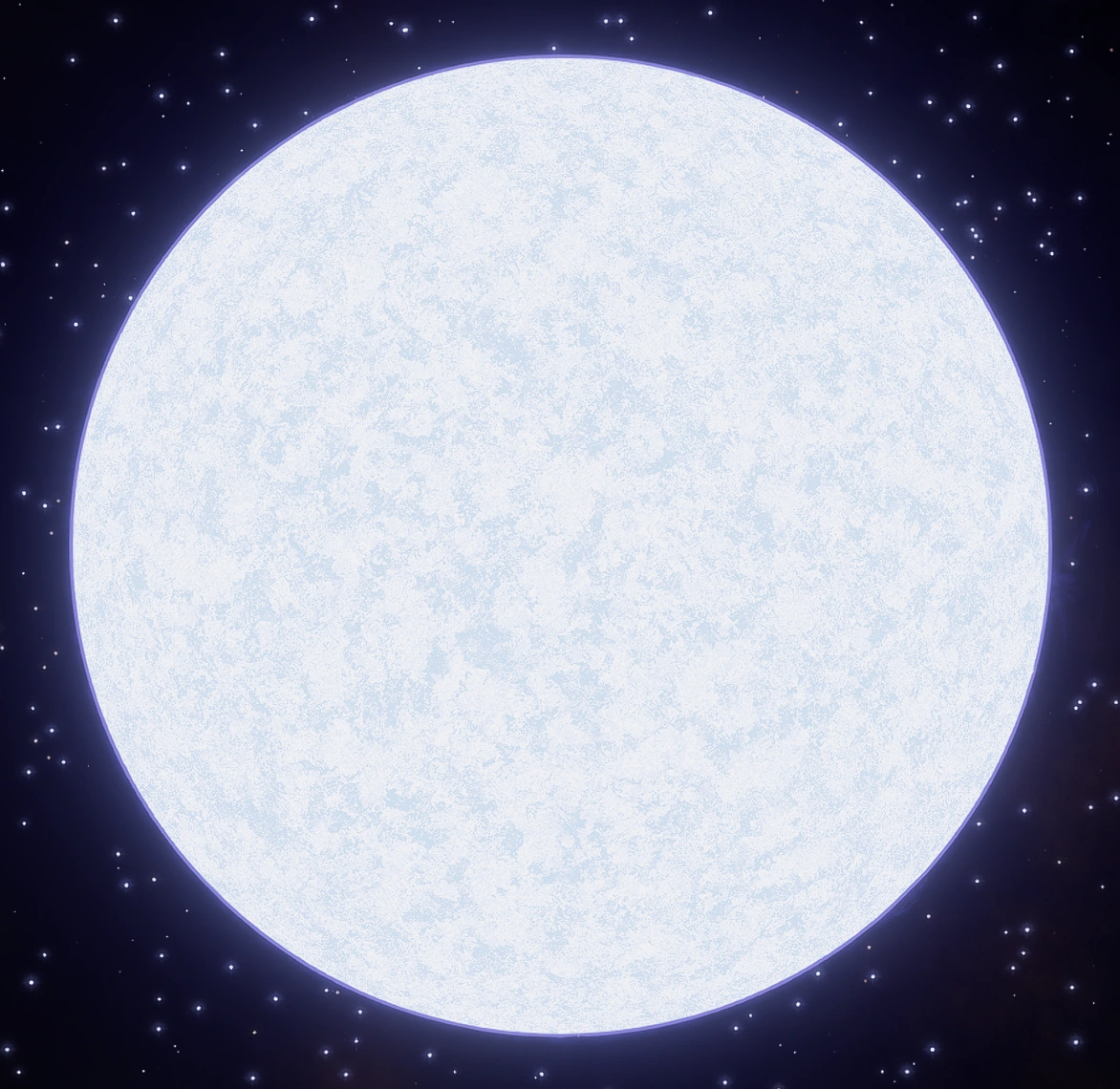 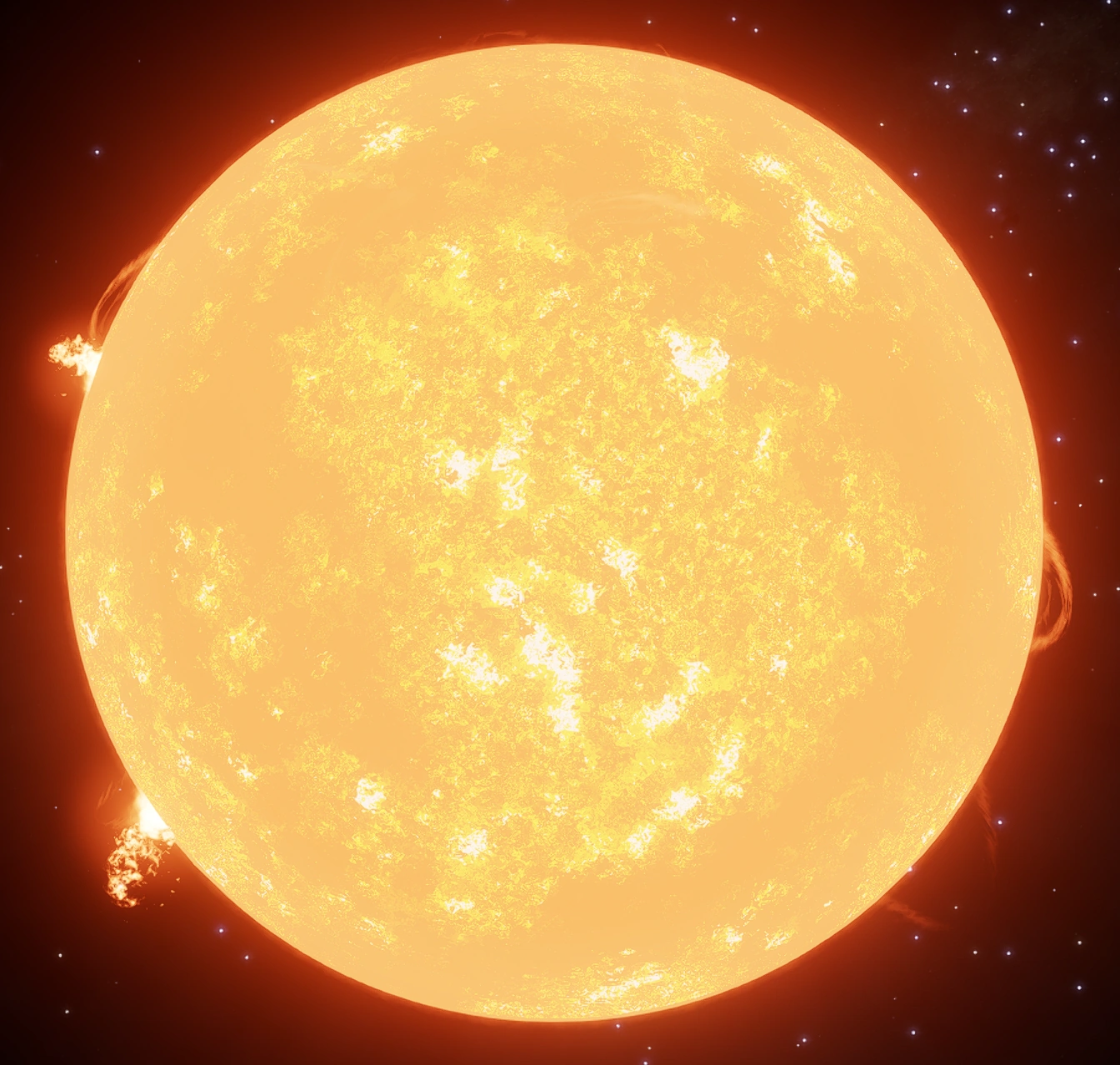 |
| WO | Wolf-Rayet class stars are massive stars that are nearing the end of their life cycle and have moved out of their hydrogen-burning phase. They were once over 20 solar masses but now shed considerable amounts of material through solar wind. Their surface temperature can reach 200,000 K, so they appear a brilliant blue. This star is a variant of the Wolf-Rayet stars whose spectrum is dominated by ionised helium, carbon and oxygen lines. | No | Very Common (~47%) | 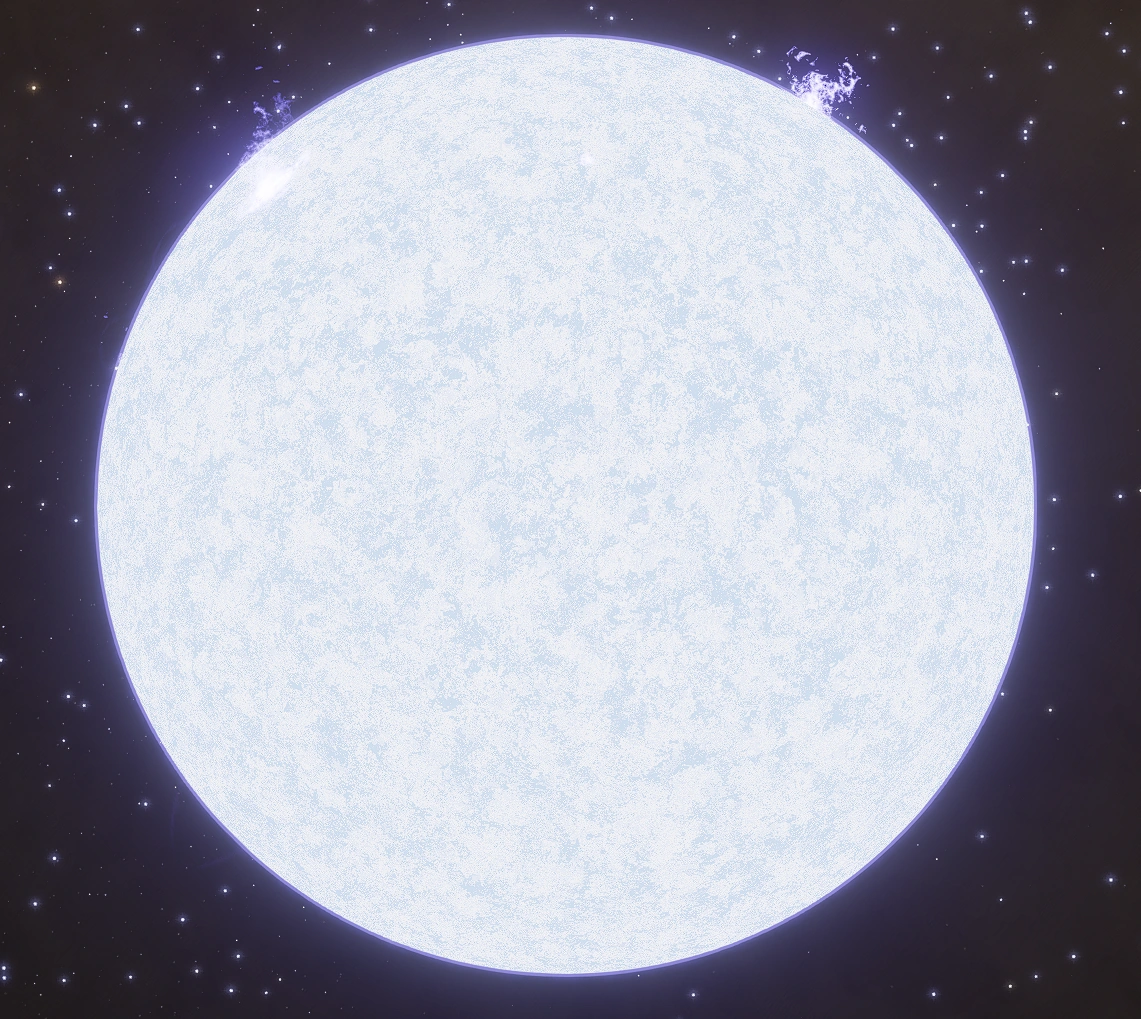 |
Black Holes
| Class | Description / Notes | Fuel-Scoopable | Rarity Within Type | Image |
|---|---|---|---|---|
| Black Hole | Black holes are typically the stellar remnants of super massive stars of twenty solar masses or more, that have reached the end of their lives. Nuclear fusion has ceased, and the star collapsed to the most extreme point possible - where gravity is so extreme light itself can no longer escape. If matter should fall on to such a body, an extreme burst of gamma radiation will be emitted, but otherwise the body is only visible by the gravitational distortion in the vicinity. In many cases black holes can be seen emitting brightly in X-rays because of matter falling on to their surface from a companion body. Less likely to be found nearer the edge of the galactic plane. | No | N/A | 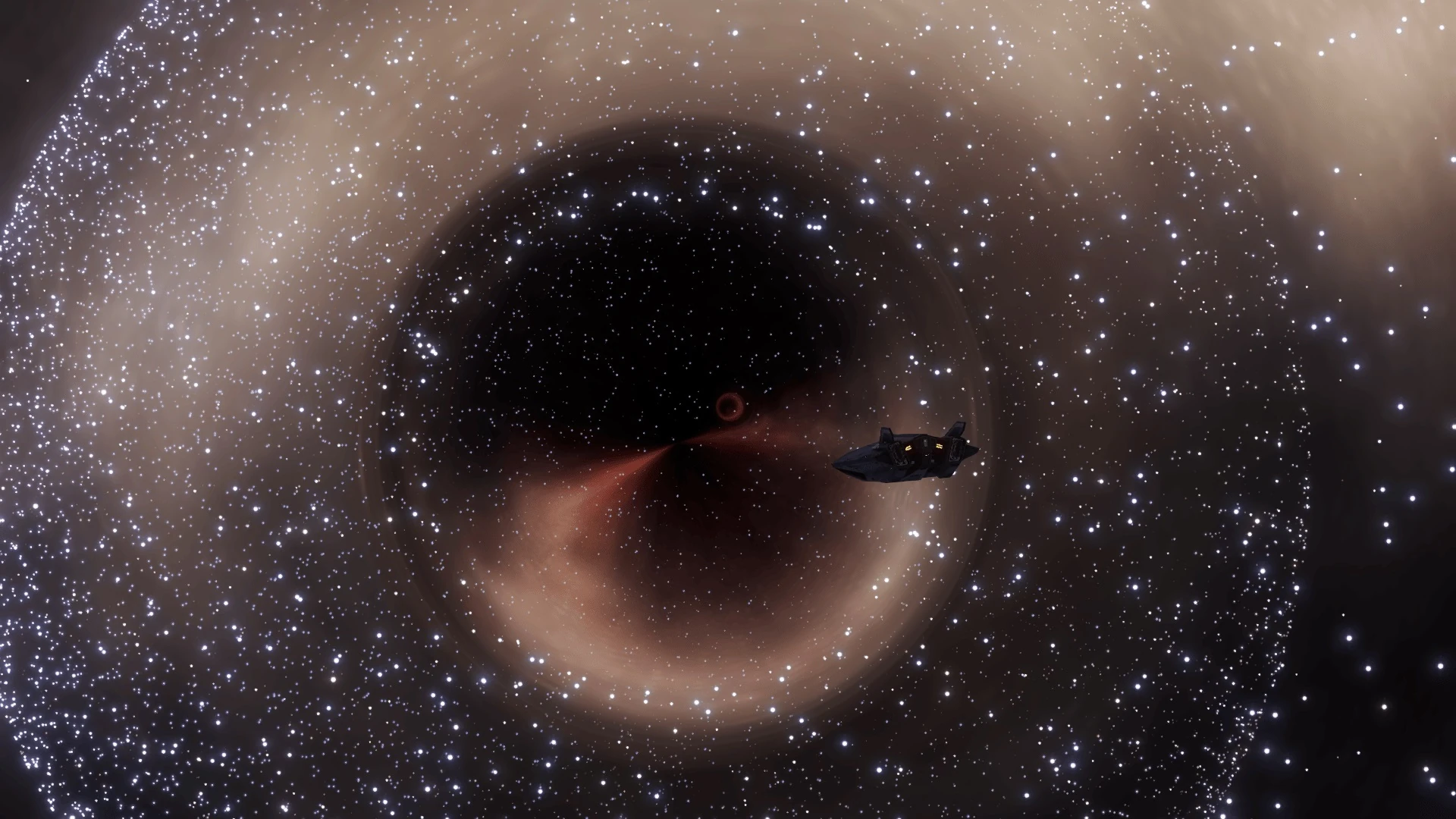 |
| Supermassive Black Hole | Supermassive Black Holes tend to form when an initial Black Hole begins to swallow even more mass including other Black Hole. With time they acquire a vast mass - and become a key compoment of the galaxy. With much of the other galactic mass rotating around them and can be several million solar masses. Take great caution when approaching a supermassive black hole, as unlike other smaller black holes, a supermassive black hole will cause rapid heat build-up if approached too closely, causing significant ship damage. Sagittarius A* is currently the only known Supermassive Black Hole in the game. | No | Only 1 documented | 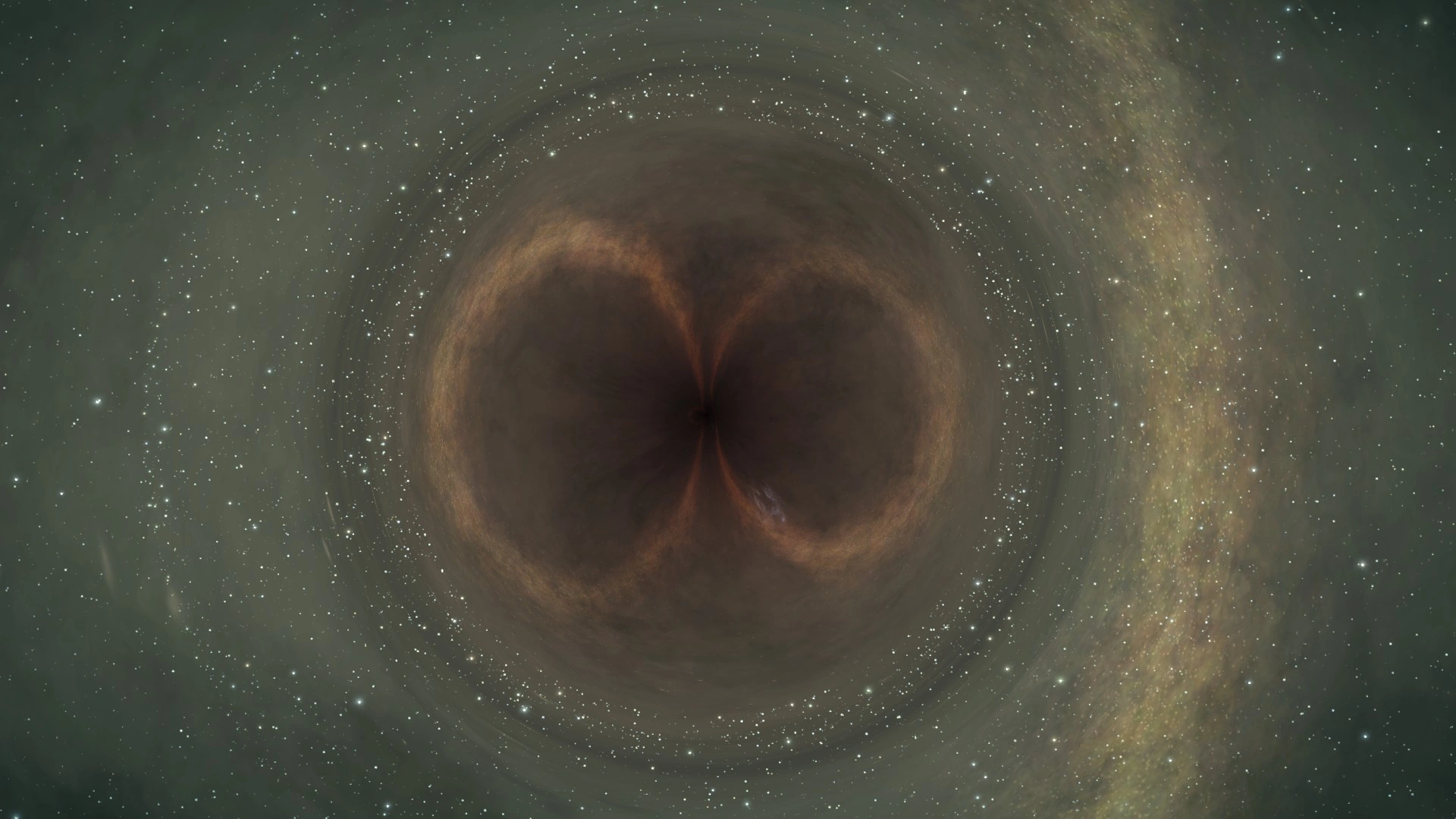 |
Neutron Stars
| Class | Description / Notes | Fuel-Scoopable | Rarity Within Type | Image |
|---|---|---|---|---|
| Neutron Star | Neutron stars are the stellar remnants of massive stars that have reached the end of their lives. Once nuclear fusion was exhausted, the star collapsed into a tiny volume. Because of its high mass, the matter has collapsed into Neutron-degenerate matter (sometimes called Neutronium), an extremely high density state made up entirely of neutrons (matter composed of stuff other than atoms, such as quarks, protons, neutrons or whatever, is referred to as “degenerate matter”). Unlike most degenerate matter where electrons are below the Fermi-Energy (chemical potential at T=0), the compression is so great that the Fermi-Energy of the electrons increases such that they combine with protons to form neutrons. As the star is in equilibrium, its gravity is balanced by ‘neutron degeneracy pressure’ (compressed neutron wave functions which are energetic due to the uncertainty principle), though with more mass the system’s gravity would overcome the neutron degeneracy pressure forming a black hole. Degenerate matter stars are as dense as matter can possibly be without becoming a black hole. Take caution when approaching these stars, as they are so tiny they are almost invisible. They still radiate heat, and getting closer than 0.25Ls will cause one’s heat to build up. If you fly with your ship into the emitted energy cloud your FSD will be supercharged and the jump range for the next jump will be dramatically increased. However, dropping out of supercruise while within a neutron star’s jet is incredibly dangerous, as incredibly fast particles of ionized matter will tear through your ship’s hull and systems. Take special care when supercharging to ensure that you do not fly too close to the star, or your ship may be heavily damaged/destroyed after performing an emergency drop. More common near the center of the galaxy. One of the fastest spinning neutron stars is Splojoea TU-M d8-655. It was discovered by DrixFx.[6] | No | N/A |  |
White Dwarfs (D, DA*, DB*, DC*, DO*, DQ, DX)
The table below shows the white dwarf subtypes within Elite Dangerous. These do not necessarily match the notation mentioned above (for example, ED uses DAZ which probably should be DZ) but comes very close. The “Rarity” column indicates the subtype rarity within the White Dwarfs spectrum.
| Class | Description / Notes | Authoring (mainly) | Rarity Within Type | Image |
|---|---|---|---|---|
| D | D type stars are stellar remnants known as white dwarfs stars. Nuclear fusion has now cease, and now in the absence of radiation pressure the core has collapsed, heating it up greatly before a slow cooling-down phase. Surface Temperatures are usually between 8,000k and 40,000k, so these stellar remnants are blue white. | Manual | Very Rare (~0.9%) | |
| DA | Class DA stars are white dwarf stars with a hydrogen rich atmosphere. Take caution when approaching these stars, as their sphere of influence is surprisingly large for their size. | Procedural | Common (~29%) | 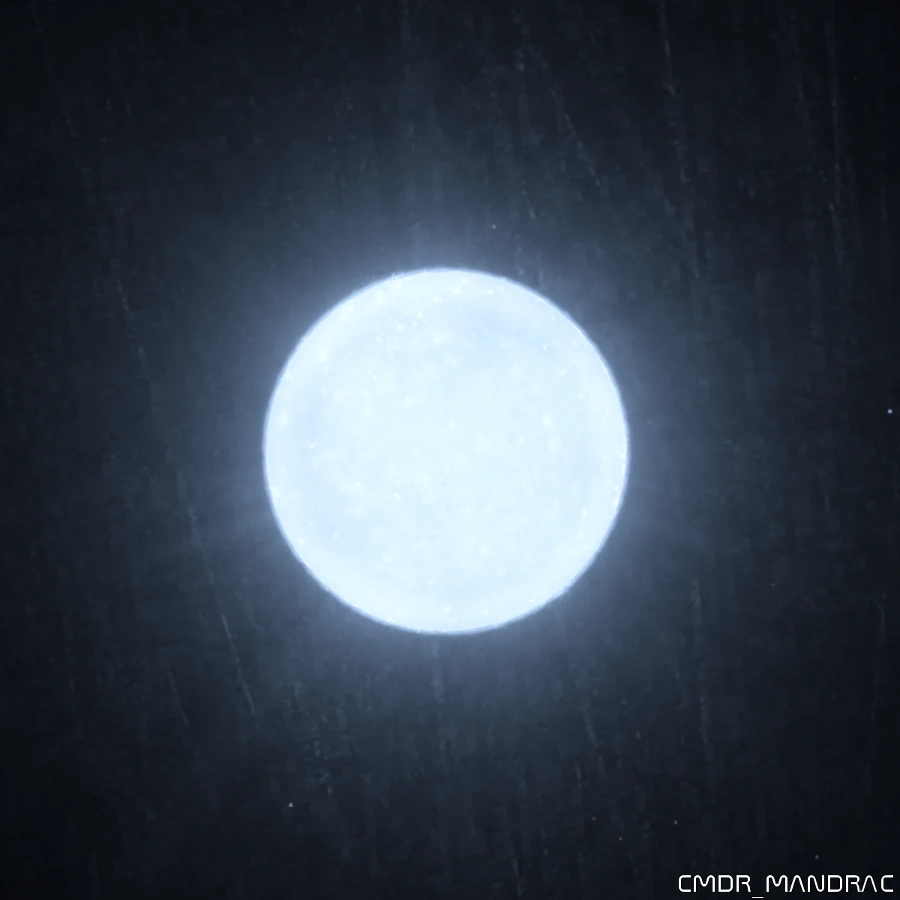 |
| DAB | Class DAB stars are white dwarf stars with hydrogen and helium rich atmospheres and neutral helium emission lines. | Procedural | Common (~12%) | 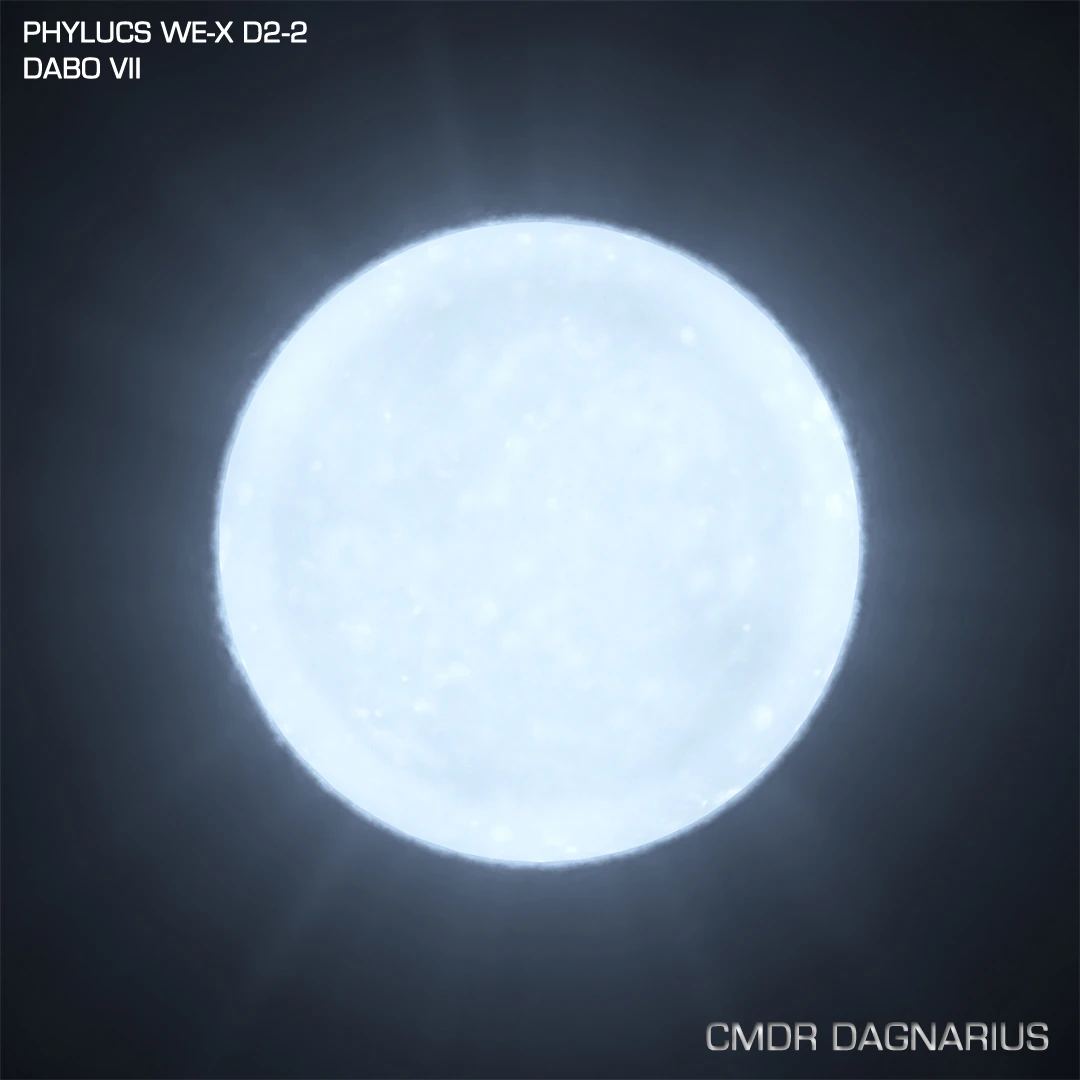 |
| DAO | ||||
| DAV | DAV class stars are also known as pulsating white dwarfs as their luminosity changes according to non-radial gravity waves within the star. They have hydrogen rich atmospheres. | Procedural | Rare (~3.2%) | 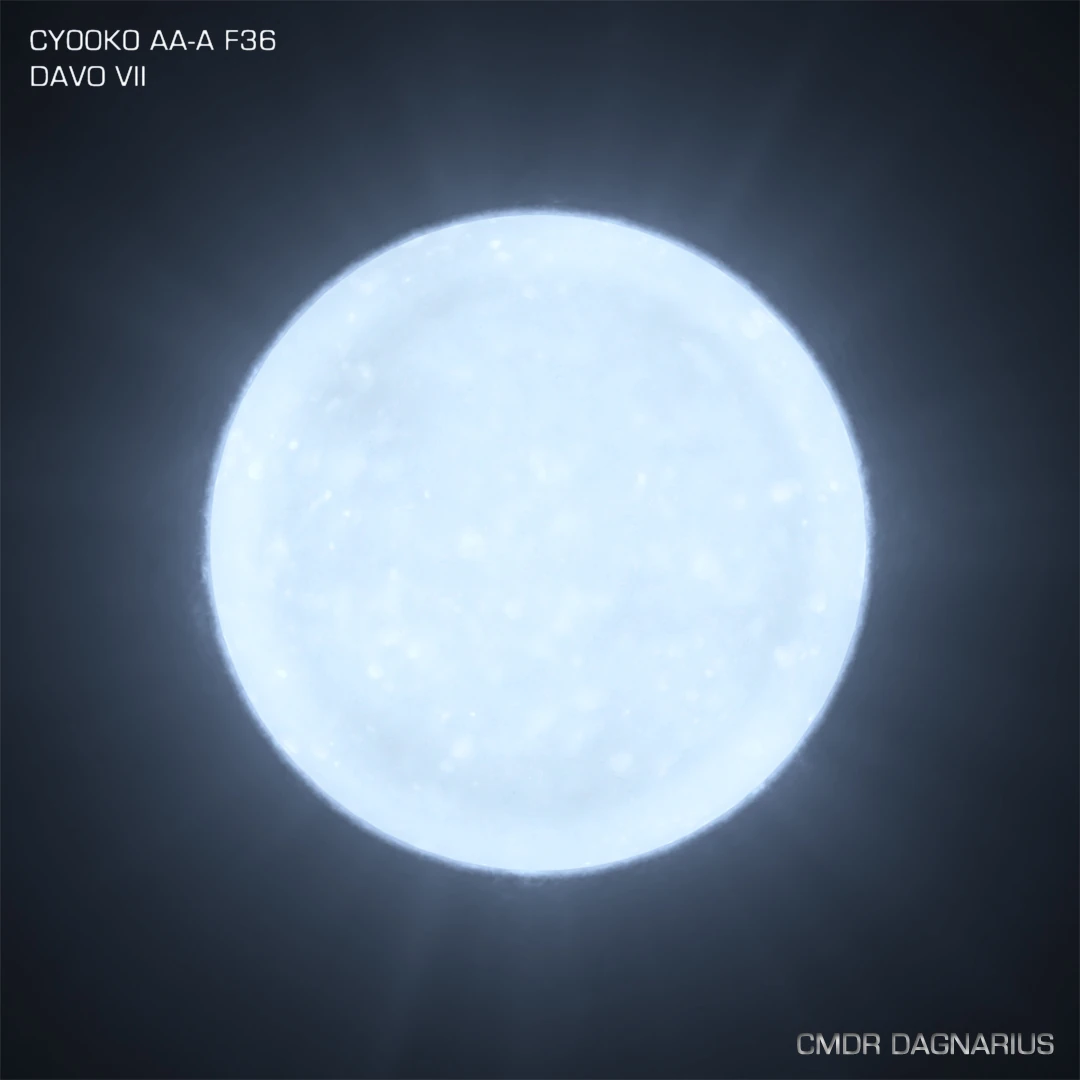 |
| DAZ | Class DAZ stars are white dwarfs which are hydrogen rich metallic stars. | Procedural | Very Rare (~0.43%) | 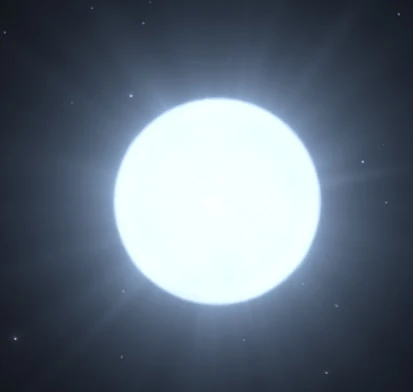 |
| DB | Class DB stars are white dwarf stars with a helium rich atmosphere with neutral helium emission lines. | Procedural | Uncommon (~5.1%) | 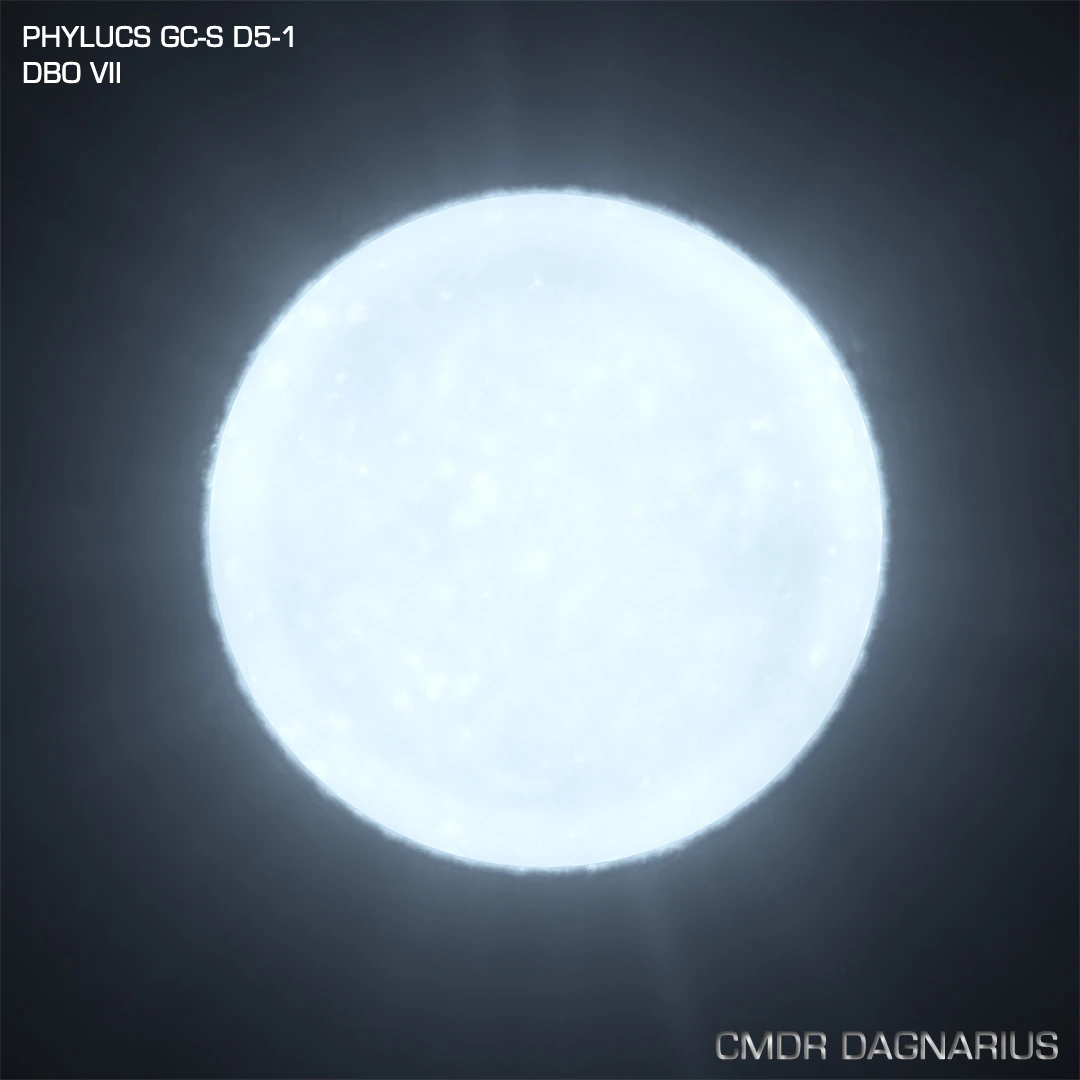 |
| DBV | DBV class stars are known as pulsating white dwarfs as their luminosity changes according to non-radial gravity waves within the star. They have helium rich atmospheres. | Procedural | Rare (~1.0%) | 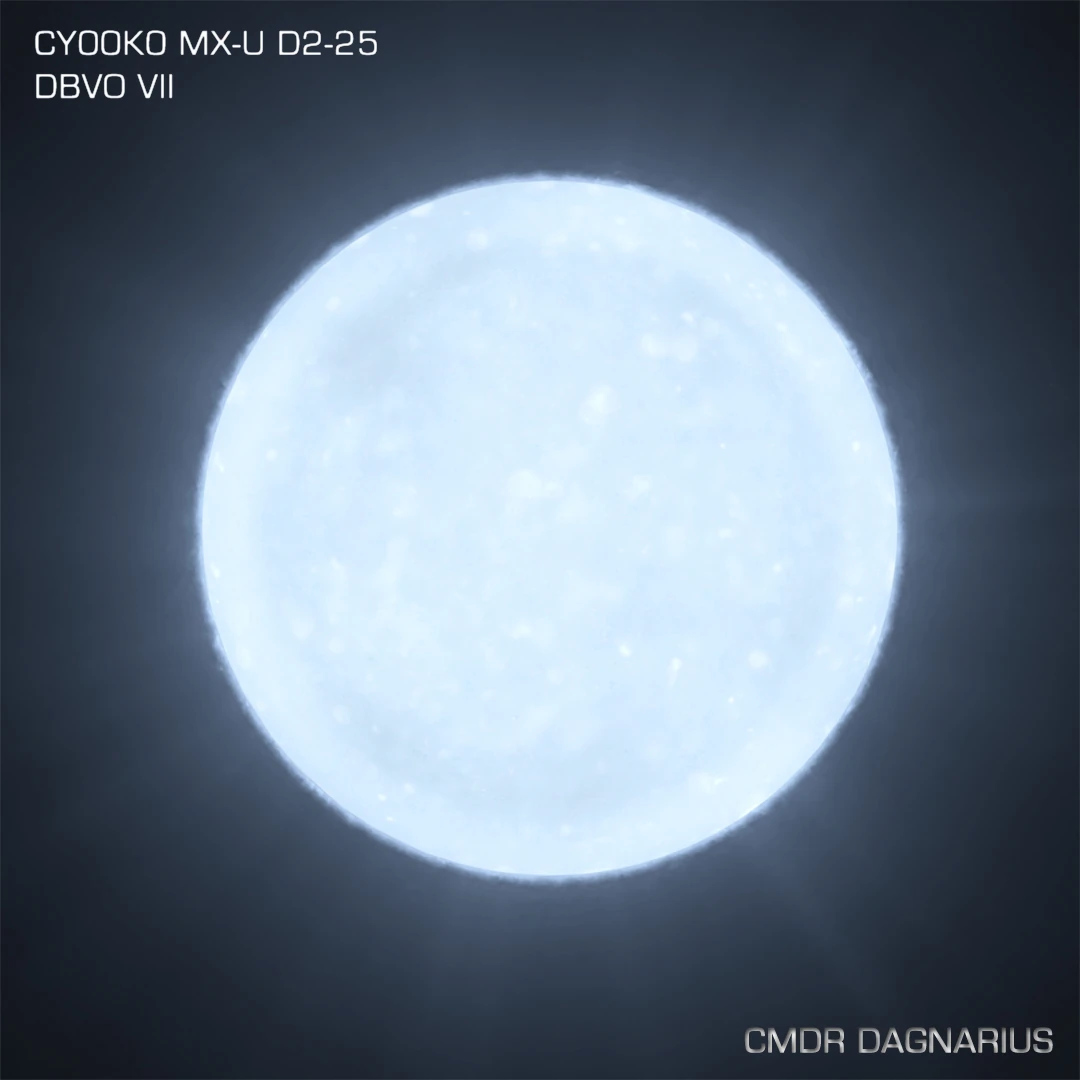 |
| DBZ | Class DBZ stars are helium rich and metallic white dwarf type stars. | Procedural | Very Rare (~0.11%) | |
| DC | Class DC stars have a continuous (blackbody) spectrum with no absorption lines deeper than 5% in any part of the electromagnetic spectrum. | Procedural | Very Common (~44%) | 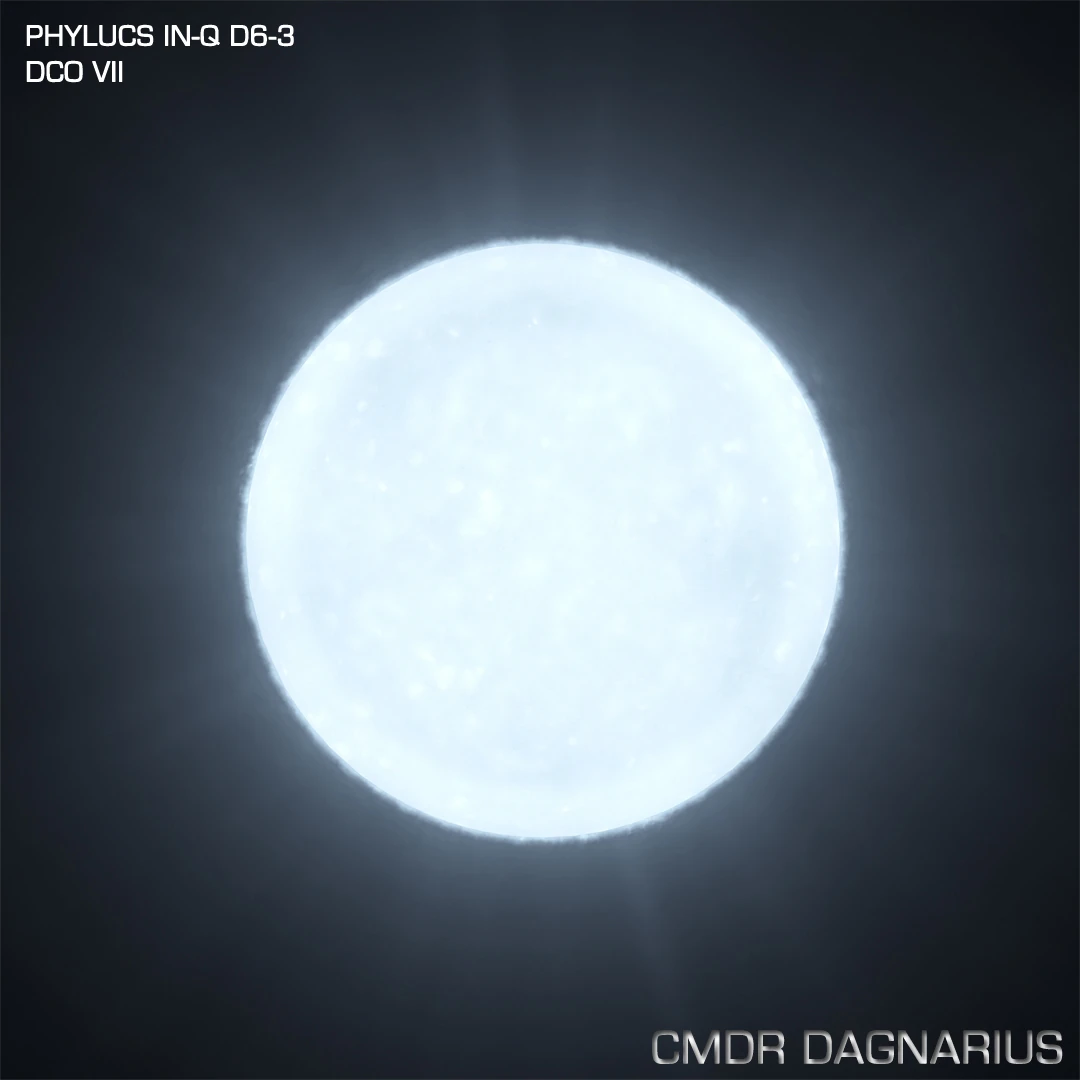 |
| DCV | Class DCV stars are white dwarfs with varying luminosity. | Procedural | Rare (~3.8%) | 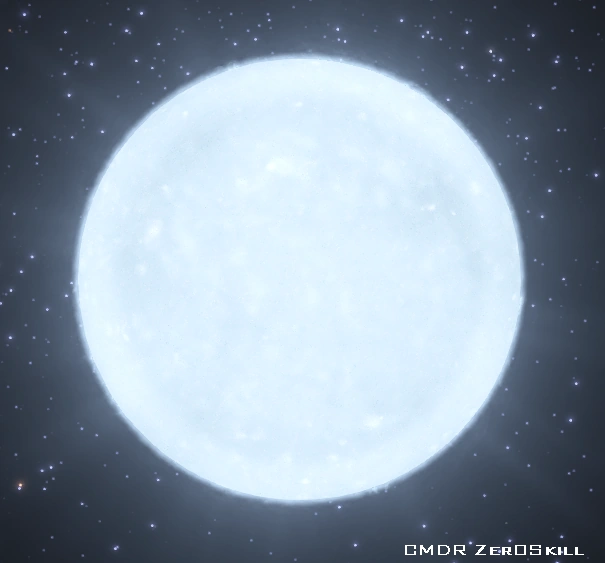 |
| DO | ||||
| DOV | ||||
| DQ | Class DQ stars are white dwarfs with a carbon rich atmosphere. | Manual | Very Rare (0.02%) | 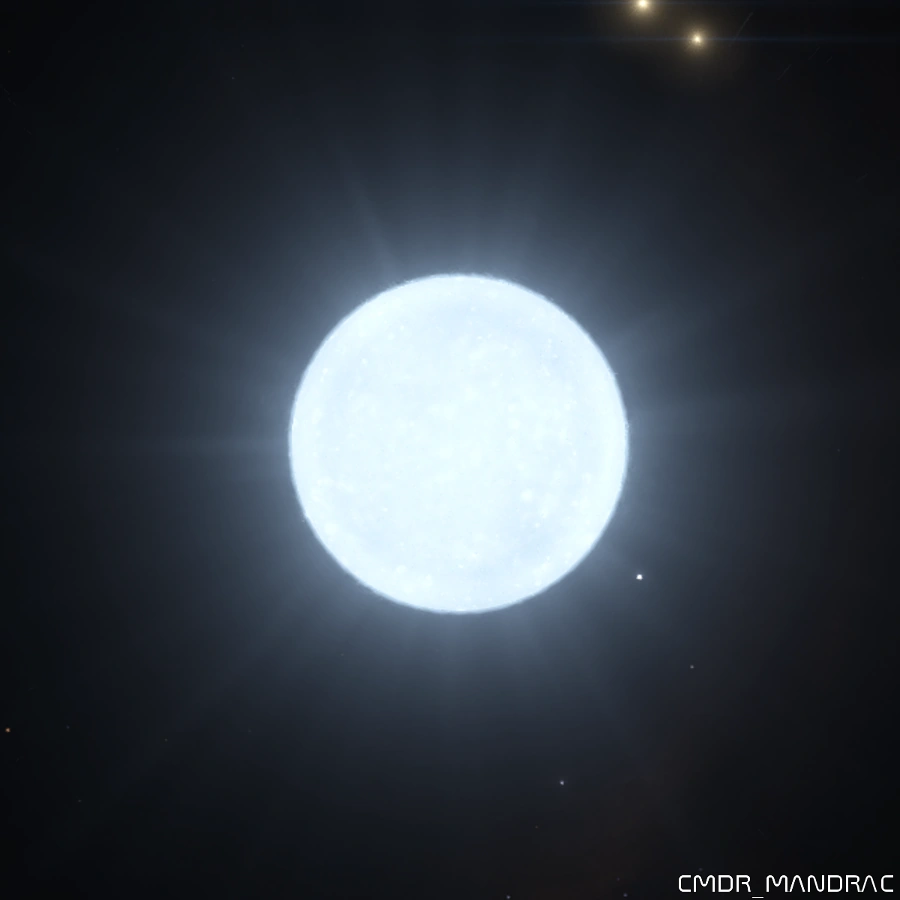 |
| DX |
Brown Dwarfs (L, T, Y)
| Class | Description / Notes | Fuel-Scoopable | Rarity Within Type | Image |
|---|---|---|---|---|
| L | Class L dwarfs are dwarf stars that are cooler than M class stars. They are on the borderline of supporting fusion of hydrogen in their cores, and their temperatures range from 1,300 to 2,400 K, cool enough to have alkaline metals and metal hydrides in their atmospheres. Class L star systems tend to contain many icy bodies. | No | Very Common (~58%) | 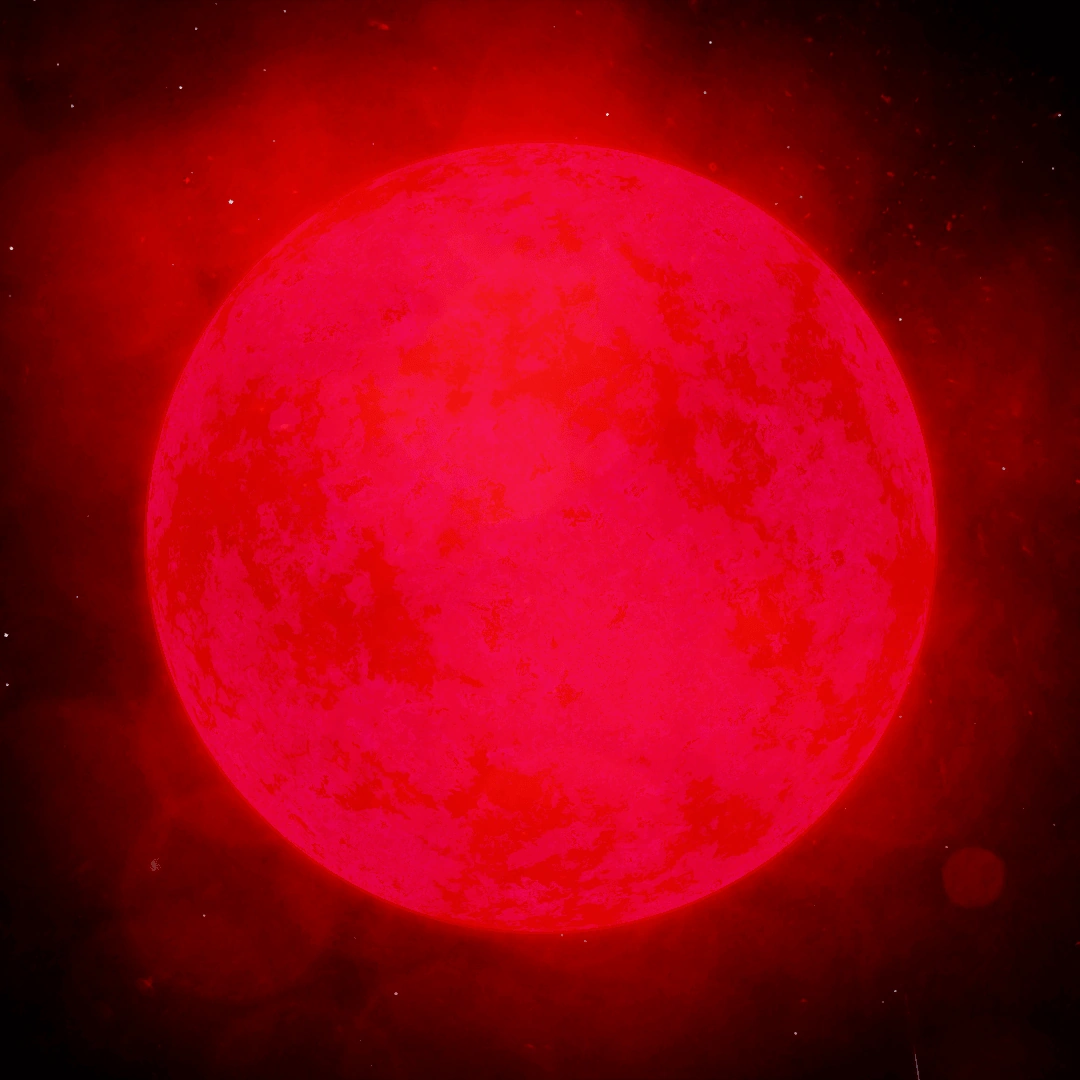 |
| T | Class T dwarfs are brown dwarfs with a surface temperature between 700 and 1,300 K. They are sometimes known as Methane Dwarfs due to the prominence of methane in their composition. They are on the borderline between what might be considered a very large gas giant planet and a star. Class T star systems tend to contain many icy bodies. | No | Common (~27%) | 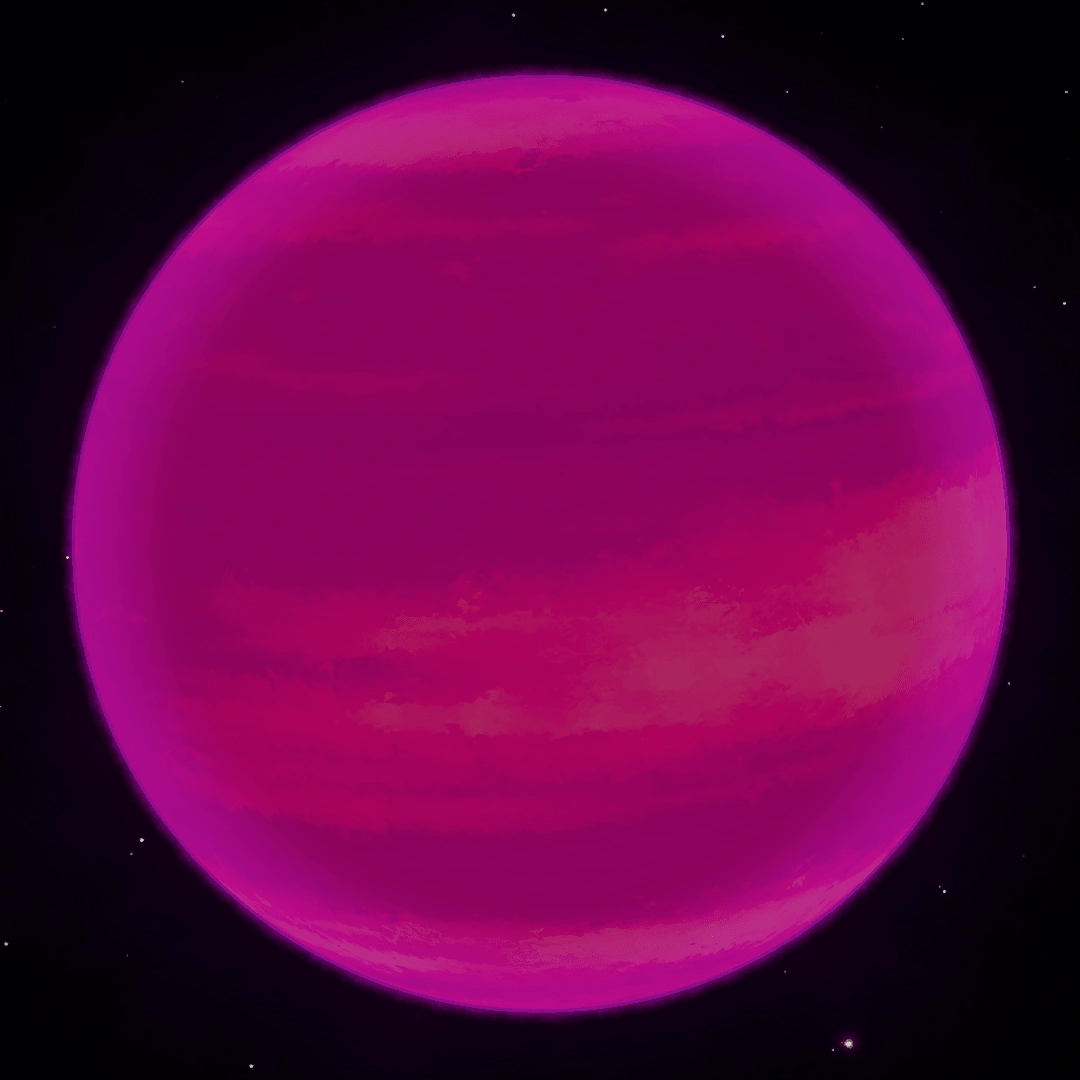 |
| Y | Class Y dwarfs are the coolest of brown dwarfs. Surface temperatures are less than 700 K, and are effectively very large gas giant planets, with some stellar properties. Class Y star systems tend to contain many icy bodies. Take caution when exiting a hyperspace jump into a Y-Class star system, as the humble appearance of these star types can cause one to fly too close to the star, hitting the body exclusion zone and triggering an emergency drop from supercruise. | No | Common (~15%) | 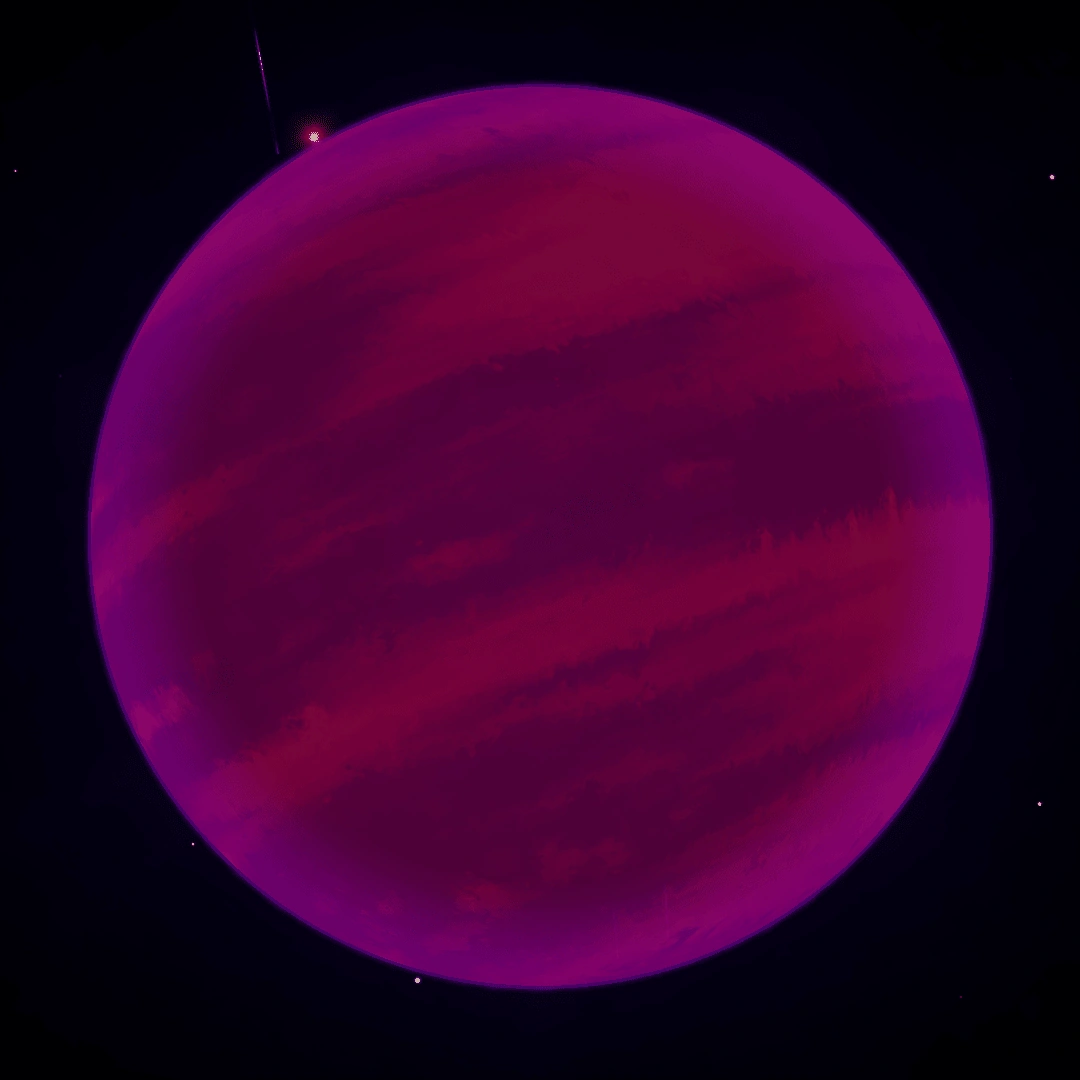 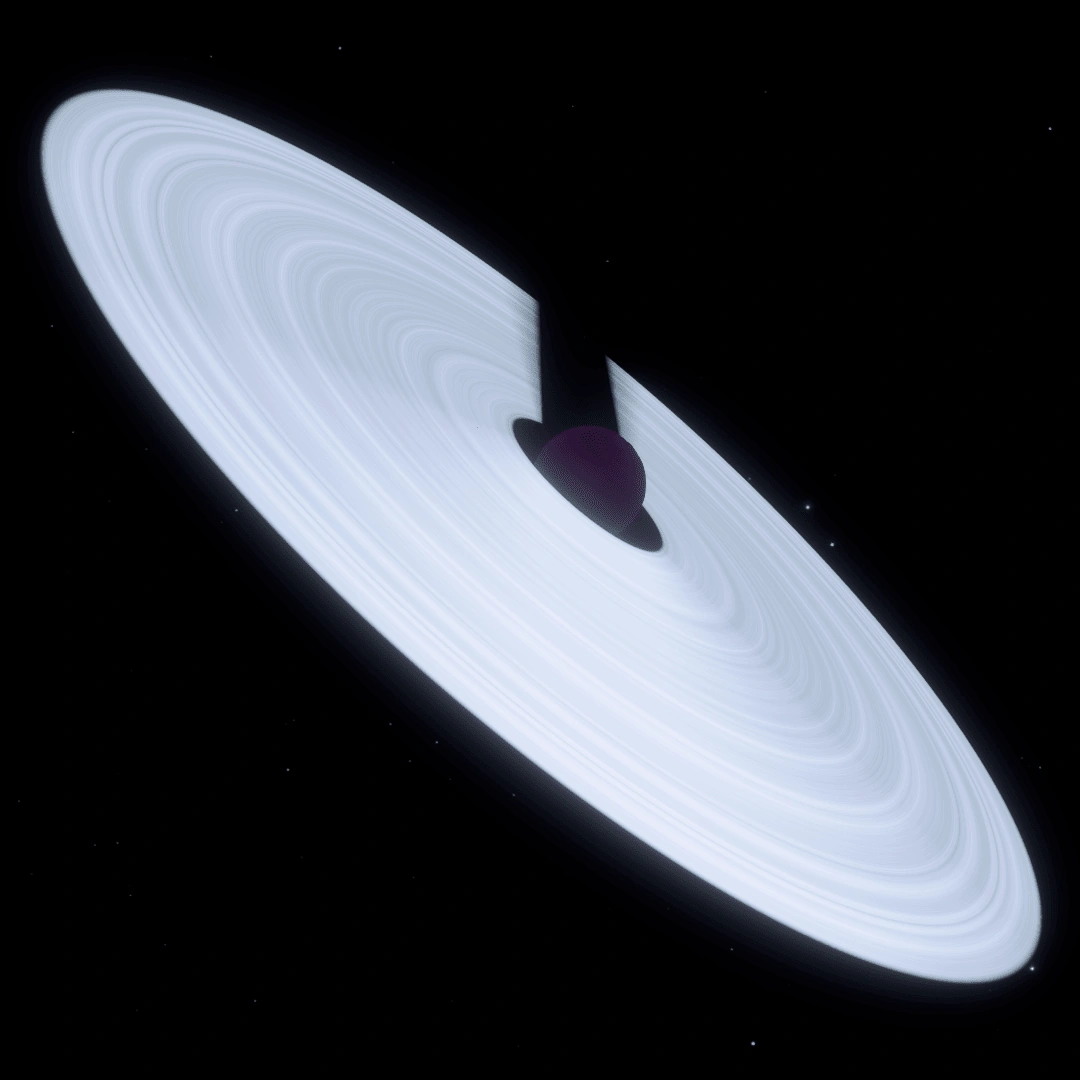 |
Undiscovered Star Types
These classes are mentioned in the Journal documentation, but none have been submitted to EDSM yet.
| Image | Class[3] | Fuel-Scoopable | Rarity Within Type | Description / Notes |
|---|---|---|---|---|
| Exotic | None found/reported yet. | |||
| Nebula | Some systems, when searched for in the galaxy map, will result in the selection of a correspondingly named nebula, which was presumably once the system that was searched for. | |||
| Rogue Planet | None found/reported yet. | |||
| Stellar Remnant Nebula | None found/reported yet. |